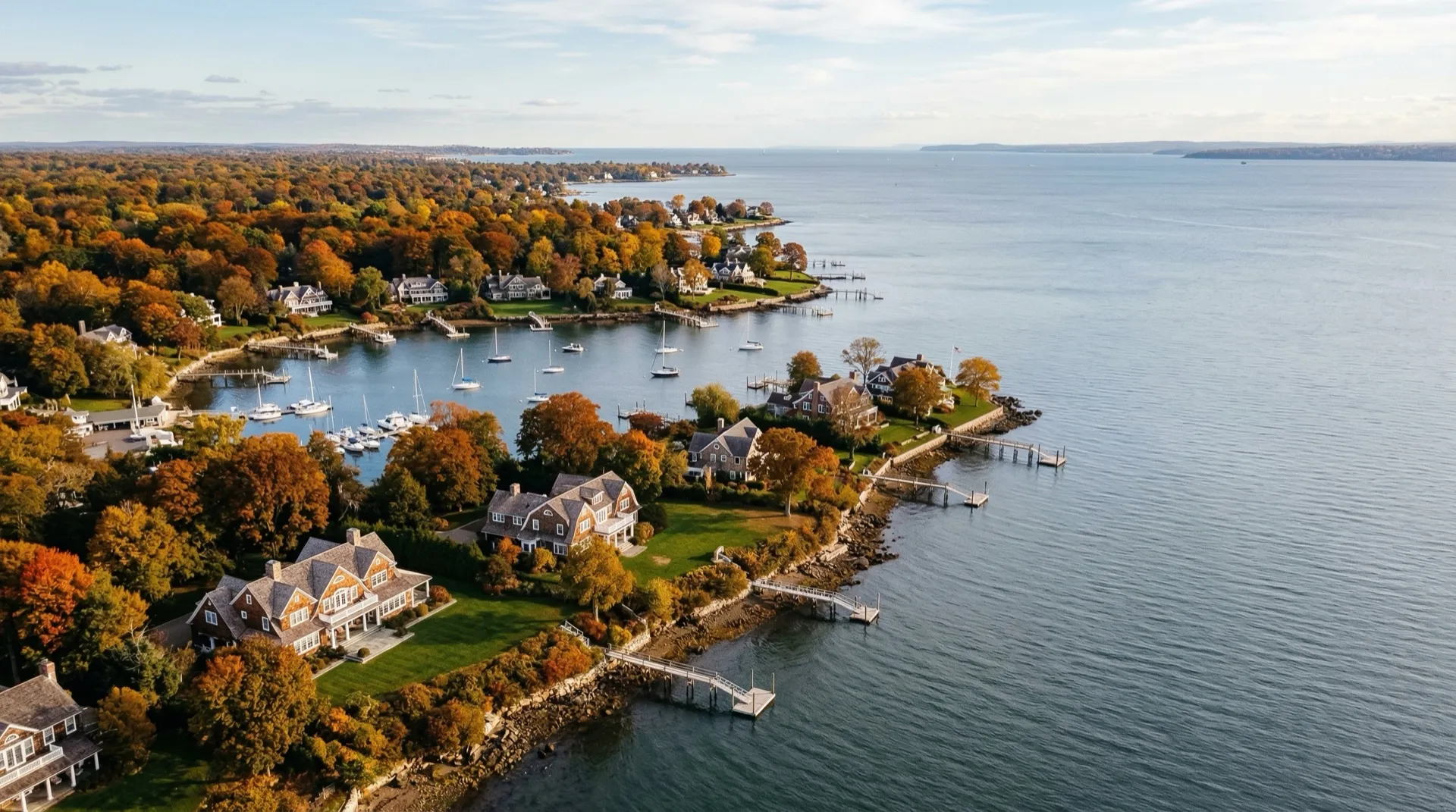
Fairfield County
Call Fairfield: (203) 919-9616
Served by our Fairfield County Service Area Team. We cover every town in the county with dedicated local crews who know the housing stock and building departments.
Home remodeling in Greenwich, CT from kitchens and bathrooms to full renovations. Licensed Fairfield County contractor with 15+ years experience serving Greenwich homeowners.
Home remodeling in Greenwich, CT starts around $40,000 for a minor kitchen refresh and reaches $400,000 or more for a full custom renovation in Back Country. The housing stock here spans pre-Revolutionary colonials in Old Greenwich, 1920s Georgian estates in Back Country, and post-war ranches in Glenville and Byram, each with its own structural demands, permitting requirements, and finish expectations. We hold CT HIC License #0668405 and serve Greenwich through our Fairfield County Service Area Team.
Ready to discuss your Greenwich renovation?
In-home visit or remote via Google Meet or Zoom. No obligation.
Get Your Free EstimateOr call Fairfield County: (203) 919-9616
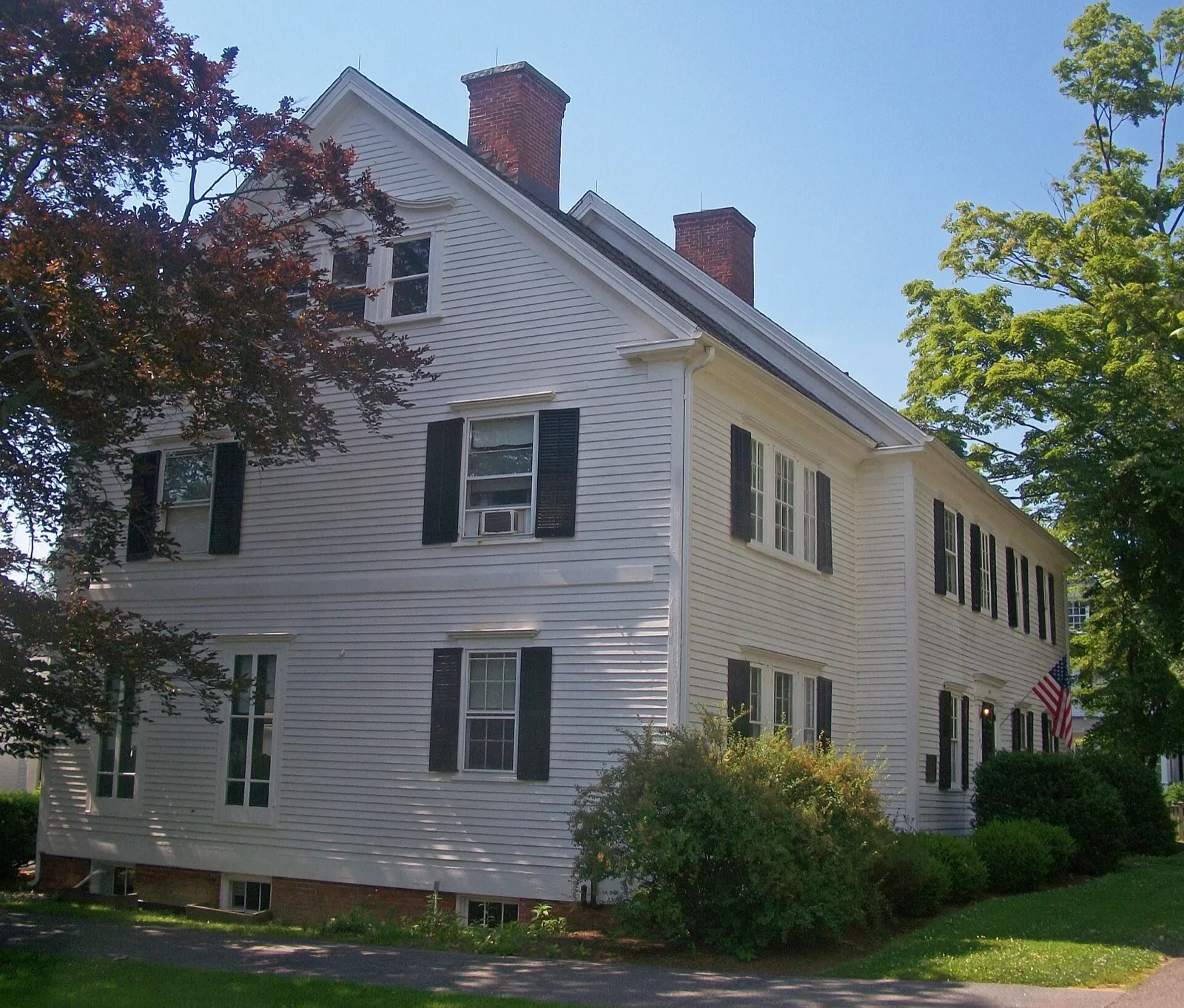
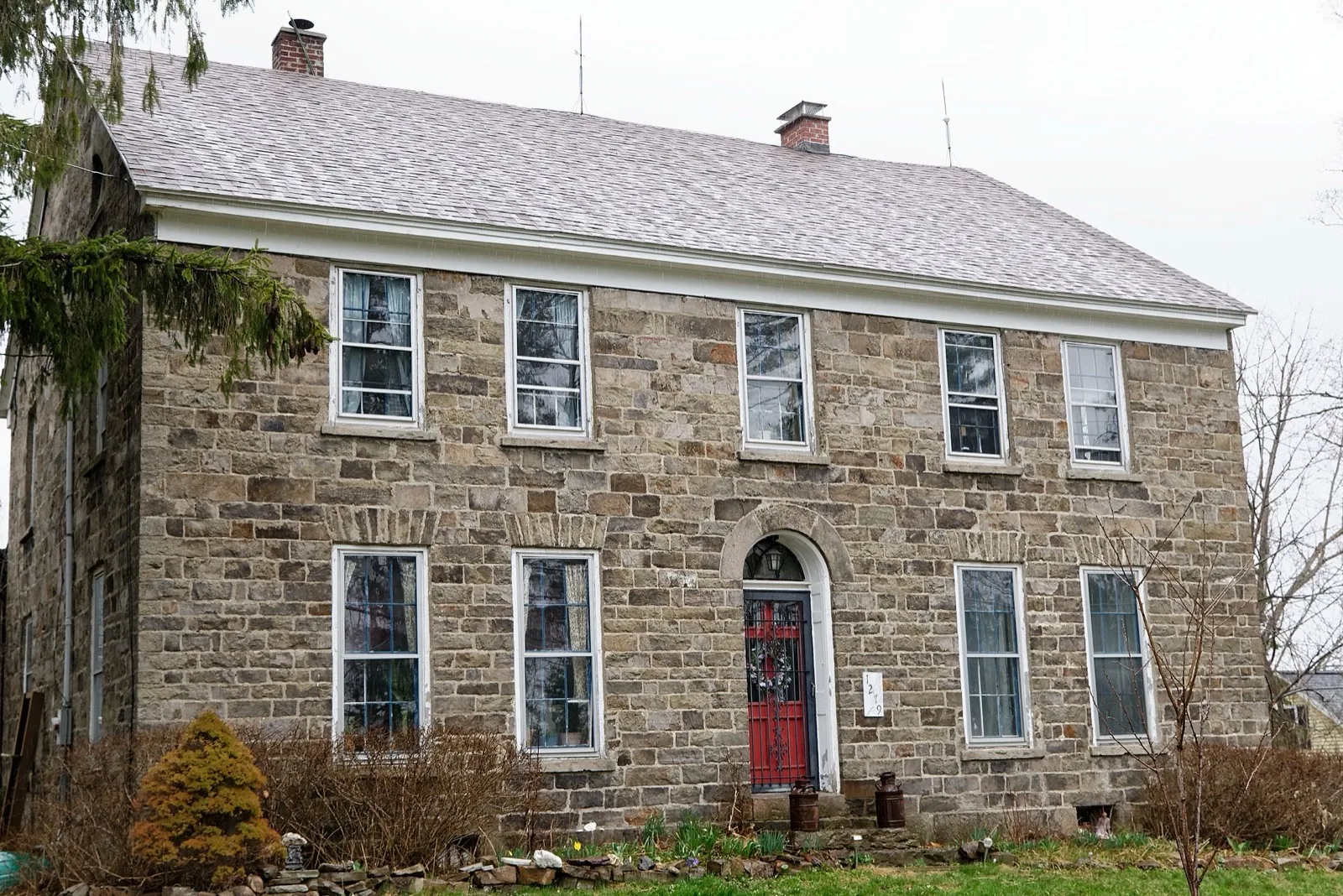
Approximately 35% of Greenwich housing units predate 1940, featuring balloon framing, plaster-on-lath walls, stone foundations, and custom millwork that require specialized remodeling approaches distinct from modern construction. Greenwich housing spans nearly four centuries, from 1640-era colonial-period structures in Old Greenwich to 1920s French Provincial estates in Back Country to post-war ranches in Glenville and Byram.

Approximately 35 percent of Greenwich's housing stock predates 1940, concentrated in neighborhoods like Old Greenwich, Cos Cob, and central Greenwich. These homes were built with construction methods that predate modern building code, including wall framing that lacks the horizontal fire stops now required between floors. Any renovation that opens a wall in these homes triggers code-mandated upgrades before the wall is closed again.
The interior finish in most pre-war Greenwich homes is three-coat lime plaster over wood lath, not drywall. Matching existing plaster in a partial renovation is a skilled trade that most general contractors outsource or skip. We handle it in-house because in Greenwich, the details are what the homeowner notices first.

Greenwich sits on a mix of bedrock and glacial till, and homes built before 1920 typically rest on fieldstone and cut granite foundations that predate modern footing standards. Along the Mianus River corridor in Cos Cob and the shoreline in Old Greenwich and Riverside, elevated water tables create hydrostatic pressure that pushes moisture through these porous walls year-round.
Before we frame a single wall in a Greenwich basement, we complete a moisture assessment and address drainage. Interior perimeter systems, vapor barriers, and sump installations are standard scope here, not optional add-ons. The foundation dictates the project plan, not the other way around.

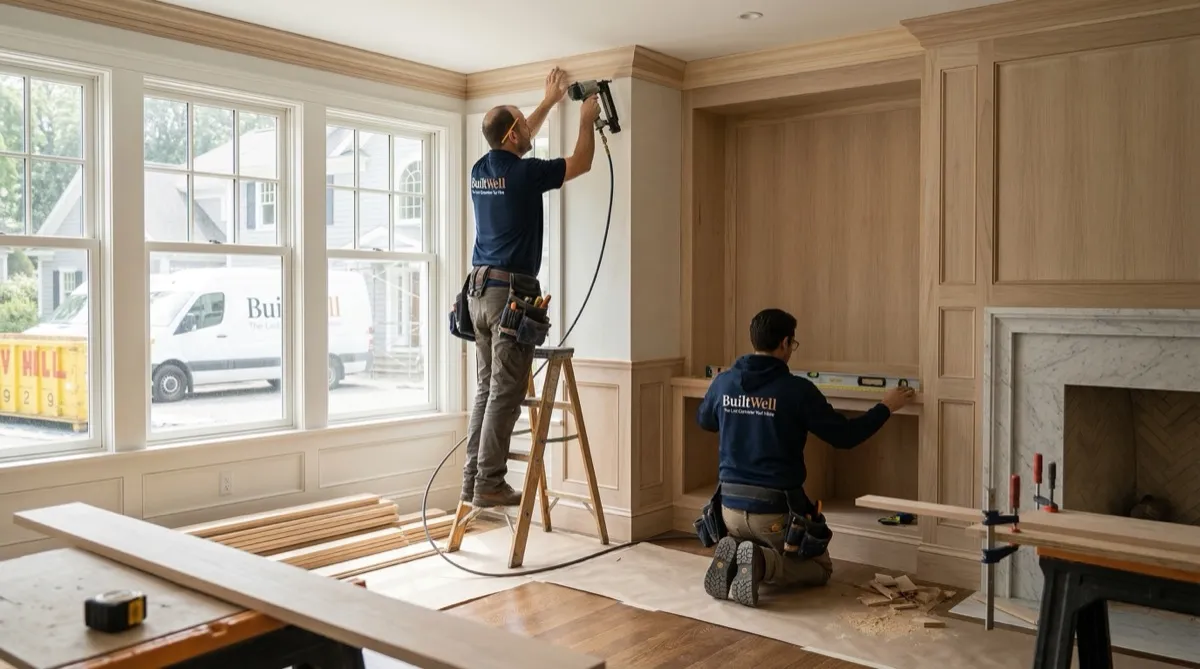
Trim profiles in pre-war Greenwich homes present a separate challenge. Ovolo, ogee, and beaded molding profiles from the 1890s through the 1930s cannot be matched from any lumber yard shelf in Connecticut. When a project calls for replicating original millwork, we source custom profiles.
Excavation is the other hidden variable. Rock ledge is common throughout elevated sections north and west of the Post Road, especially in Back Country, Mid-Country, and the western side of town. Greenwich permits only mechanical ledge removal, not blasting, so hydraulic hammering becomes part of the scope. We budget for that reality up front rather than pretending every addition or basement project will encounter clean digging.
Greenwich contains eight distinct neighborhoods for remodeling purposes, including Back Country estates on four-acre lots, pre-Revolutionary colonials in Old Greenwich, and entry-level ranches in Glenville and Byram, each with different structural conditions, permitting requirements, and finish expectations.
Back Country sits north of the Merritt Parkway in the RA-4 zone, where minimum lot sizes run four acres. The housing stock here is the estate belt: French Provincial manors, Georgian colonials, and English manor houses built primarily in the 1920s through the 1940s for New York financiers. Primary residences here routinely run 10,000 to 25,000 square feet, and projects in Back Country often involve multiple structures simultaneously: main house, guest house, pool house, carriage house. Gated enclaves like Conyers Farm define the character of this neighborhood. Projects at this scale require careful scheduling, multiple permit applications running in parallel, and crews who can work at the finish level these homes demand. Material quality is not negotiable here; it is the starting point.
Mid-Country occupies the band between the Merritt Parkway and the Post Road, with one- to four-acre properties and a housing stock that runs from 1950s colonials through 1980s split-levels and ranches. Neighborhoods like Khakum Wood represent the character of this zone. Since the early 2000s, Mid-Country has seen sustained gut-renovation and replacement activity as buyers absorb older properties and rebuild or fully renovate them to current expectations. The structural conditions here are more varied than in Back Country. You can encounter anything from a conventional 1960s ranch with standard platform framing to a 1930s colonial that has been partially updated three times by three different owners, each with different standards.
Old Greenwich is the original settlement, established in 1640, and the housing stock reflects that history: pre-Revolutionary colonials, 1920s Tudor revivals, and post-war capes clustered around Sound Beach Avenue near the shops and train station. The Indian Harbor and Field Club neighborhoods carry premiums that reflect both location and architectural quality. Renovation work in Old Greenwich frequently involves historic materials, original woodwork, and footprints that were laid out before modern concepts of kitchen or bathroom function existed. Layout changes here require structural evaluation and often HDC review for any work that touches the exterior.
Cos Cob grew as a fishing and mill community along the Mianus River, and its housing stock is the oldest and densest in Greenwich outside of Old Greenwich proper. Late Victorian cottages, New England colonials from the 1880s through the 1920s, and post-war ranches characterize the neighborhood. The Bush-Holley House, built circa 1730 and now a National Historic Landmark, sits here and speaks to the age of the built environment. The Mianus River corridor creates elevated water table conditions throughout Cos Cob, and basement work in this neighborhood consistently requires perimeter drainage and sump systems as a baseline measure. Younger buyers who enter the market at Cos Cob's relatively lower price points have been investing heavily in renovation here, making it one of the most active sections of Greenwich for remodeling activity.
Riverside is characterized by shingle-style homes and New England colonial revivals built from the 1890s through the 1930s, with post-war colonial revival construction filling in the later decades. Streets like Hendrie Avenue and Sound Beach Avenue carry price tags in the $3 million to $8 million range, which sets the baseline for what finish quality means in this neighborhood. Coastal proximity brings moisture considerations for any project that touches the lower level or exterior envelope. When we work in Riverside, the finish level and material quality need to be consistent with what these homes already represent.
Glenville grew as a mill town along the Byram River and holds Greenwich's most attainable entry-level price points. The housing stock runs to ranches, bi-levels, and cape cods, with some larger colonials mixed in. Glenville has been experiencing teardown activity as buyers seek a Greenwich address at a lower acquisition cost, which means the neighborhood is in the middle of a generational shift in its building stock. For renovation projects on existing homes, the 1950s through 1970s construction here is generally straightforward from a structural standpoint, though below-grade work should still carry a ledge contingency given the geology of the area.
Byram occupies Greenwich's southwesternmost corner, bordering Port Chester, New York, and has the most urban character of any Greenwich neighborhood. Multi-family housing, older worker cottages, and small colonials define the stock. It is Greenwich's most affordable entry point. Renovation projects in Byram tend to be practical and value-driven, but the older housing stock (much of it from the late 19th and early 20th century) brings the same plaster walls, balloon framing, and stone foundation conditions found elsewhere in pre-war Greenwich.
Belle Haven is a private, gated peninsula community situated between Old Greenwich and Riverside along Greenwich Harbor. The housing stock consists primarily of estate-scale residences built from the late 1800s through the early 1900s, with significant modern rebuilds on the same lots. Properties here sit on the waterfront or have direct harbor views, which means salt air exposure, elevated water tables, and coastal building code requirements factor into every project. Interior renovations in Belle Haven routinely involve premium finishes, custom millwork, and material specifications that reflect the character of the neighborhood. Exterior modifications require approval through the Belle Haven Land Trust in addition to standard Greenwich permitting. Projects here demand crews who understand both the structural realities of coastal construction and the finish-level expectations of this community.
Greenwich building permits cost $13.26 per $1,000 of renovation budget, with separate electrical and plumbing fees of $12 per $1,000 each, and require sign-offs from Zoning, Health, the Fire Marshal, and DPW before issuance.
The building permit fee in Greenwich is $13.26 per $1,000 of renovation budget. Electrical and plumbing permits each carry a separate fee of $12 per $1,000. If your home was built before 1940, a 5% surcharge applies to the permit fee. On a $200,000 kitchen renovation in a 1930s Old Greenwich colonial, those numbers add up to a meaningful line item that needs to be accounted for in the project budget from the start.
Floor Area Ratio, or FAR, is one of the most frequently misunderstood aspects of Greenwich zoning. FAR governs total buildable square footage relative to lot size, and every structure on the property counts toward it: the main house, any garages, covered porches, and above-grade basement area. Homeowners planning additions or scope expansions often discover that FAR limits constrain what they can build before they ever get to the permit application. A Class A-2 Survey Map is required to determine setbacks, which adds cost and lead time to every project involving exterior work or changes to the building footprint.
Before the permit is issued, Greenwich requires departmental sign-offs from Zoning, Health, the Fire Marshal, and DPW independently. Those reviews happen in parallel, but the project cannot move forward until all four are complete. For straightforward interior work, this process may take a few weeks. Projects involving structural changes, new square footage, or site work move more slowly and need to be scheduled accordingly.
Properties within Greenwich's Historic Overlay (HO) or Historic Residential Overlay (HRO) districts require a Certificate of Appropriateness from the Historic District Commission before any exterior change can be made. This applies to windows, siding, doors, and in some cases paint color. Greenwich has six HRO properties and 16 HO structures town-wide, plus six designated historic districts. If your home falls within one of these zones, the HDC review is an additional step before the building permit application can proceed.
Inspection scheduling in Greenwich is managed through the City Squared portal, which has been the town's platform since February 2025. All required inspections (framing, electrical rough-in, plumbing rough-in, and final) are scheduled through this system.
We handle all permit applications, department coordination, HDC submissions where applicable, and inspection scheduling as part of every project. You should not have to navigate this process yourself, and working with a contractor who knows the Greenwich permitting environment means your project schedule is built around realistic approval timelines rather than optimistic assumptions.
Home remodeling in Greenwich, CT costs $40,000 to $400,000+ for kitchens, $15,000 to $120,000+ for bathrooms, and $25,000 to $100,000+ for basements, with costs running 20-40% above Connecticut statewide averages due to premium material expectations, permit complexity, and custom millwork requirements.
Several factors push Greenwich costs above statewide averages. Material expectations here start at a level that would represent an upgrade in most other markets. The reference points are Sub-Zero, Wolf, and Waterworks, not builder-grade appliances and stock cabinetry. Permit complexity and multi-department fees add a meaningful amount to every project budget. Custom millwork to match original profiles in pre-war homes adds both material cost and lead time. And any project involving excavation must carry a ledge contingency that can run $20,000 to $80,000 depending on what the rock conditions turn out to be.
| Tier | Scope | Typical Range |
|---|---|---|
| Minor Refresh | Cabinet doors, countertops, appliances, paint | $40,000 - $80,000 |
| Major Mid-Range | New cabinets, floors, all appliances, layout update | $90,000 - $140,000 |
| Full Custom | Full custom, structural changes, premium materials | $200,000 - $400,000 |
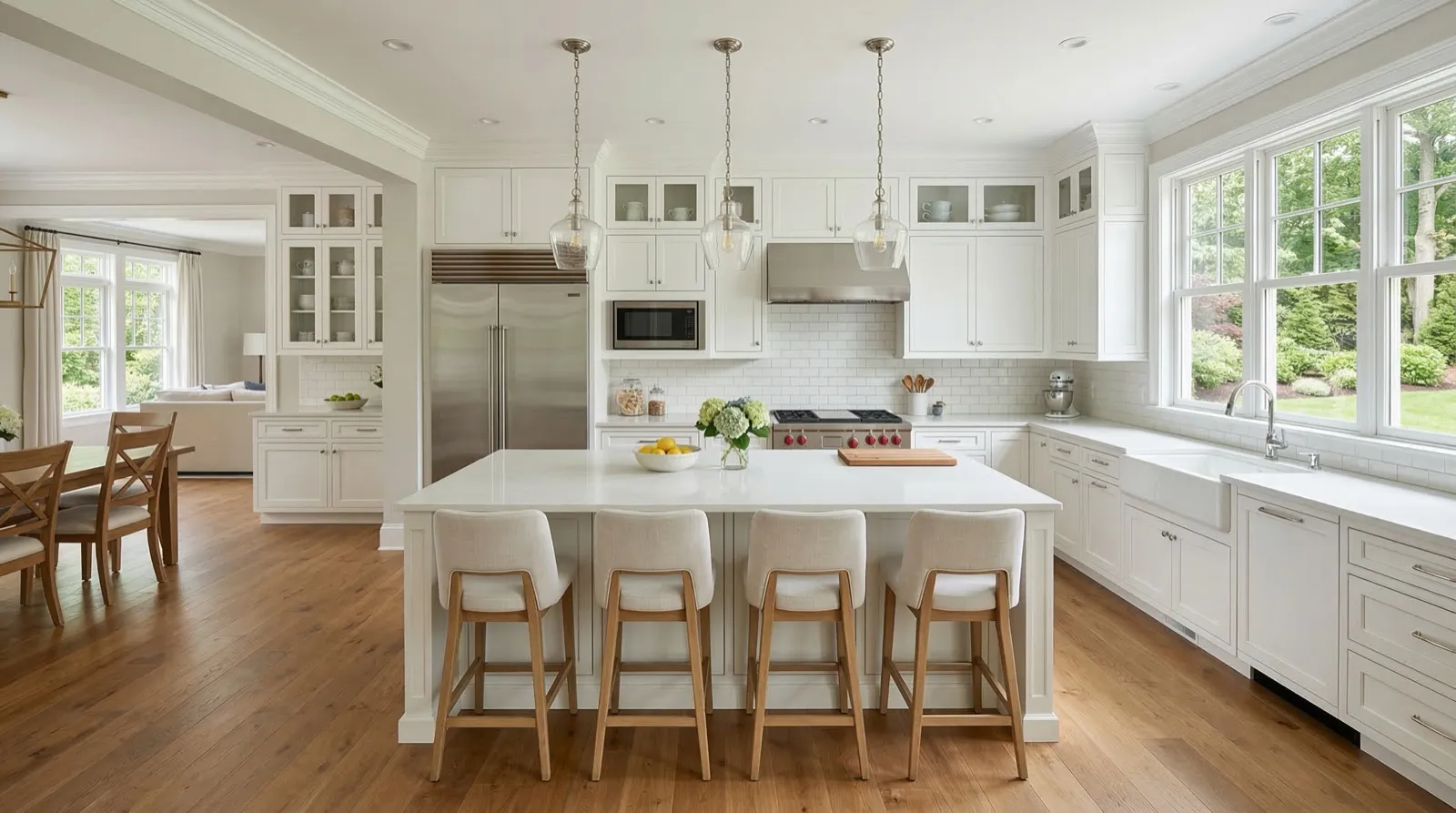
Greenwich material expectations start at a level that would represent an upgrade in most other markets. Custom cabinetry commonly runs $50,000 to $70,000 in this market, and the subcontractor network that works at the finish level Greenwich homeowners expect charges accordingly.
| Tier | Scope | Typical Range |
|---|---|---|
| Basic | Fixtures, vanity, flooring, paint | $15,000 - $25,000 |
| Mid-Range | Full gut, new tile, walk-in shower or tub, vanity | $25,000 - $55,000 |
| High-End | Layout changes, premium fixtures, spa features | $55,000 - $120,000+ |
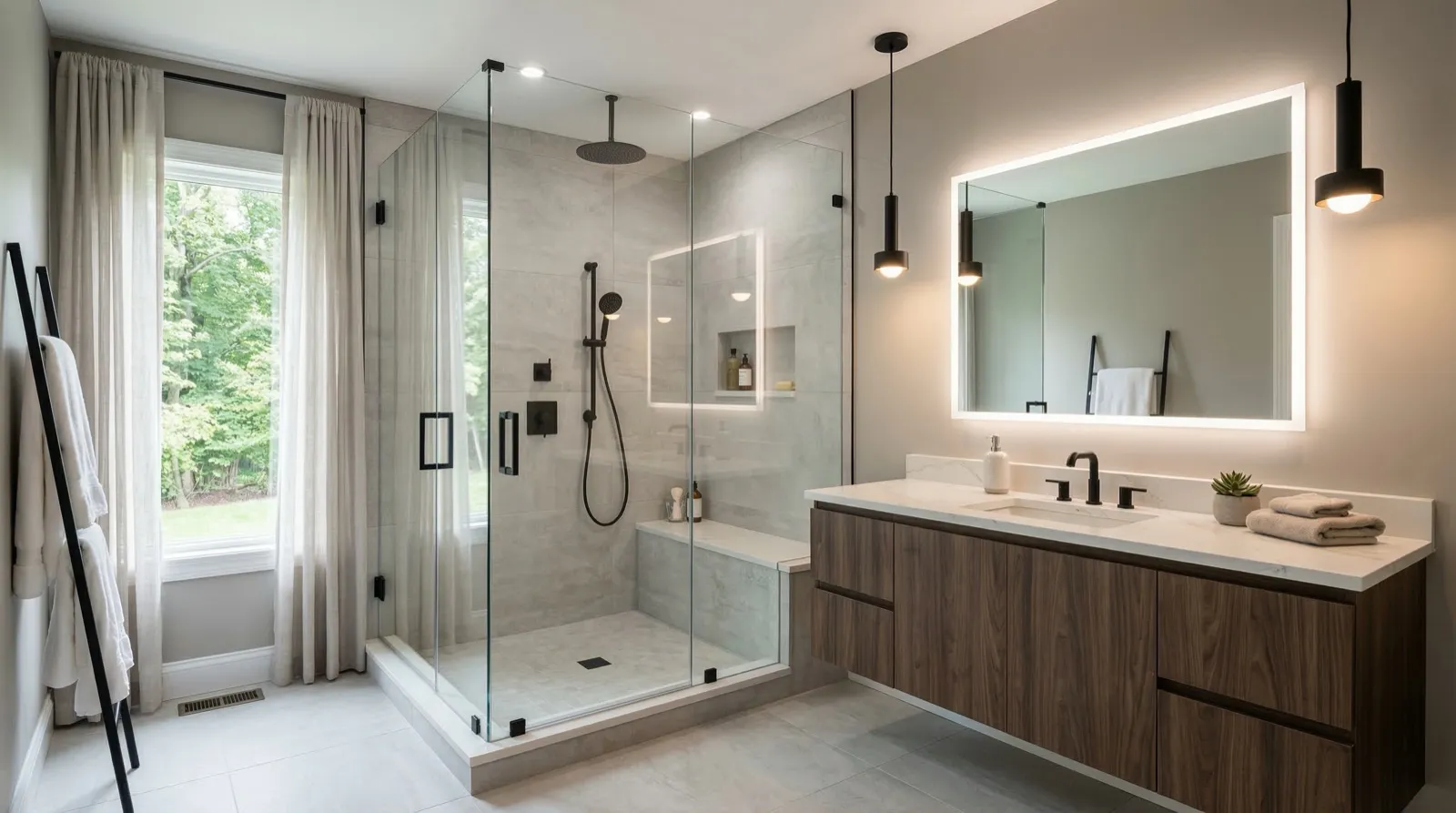
Moisture management (drainage systems, sump installation, or waterproofing membrane) is often required before framing begins, particularly in Cos Cob, Byram, Riverside, and Old Greenwich, and that work is priced separately from the finish scope.
| Tier | Scope | Typical Range |
|---|---|---|
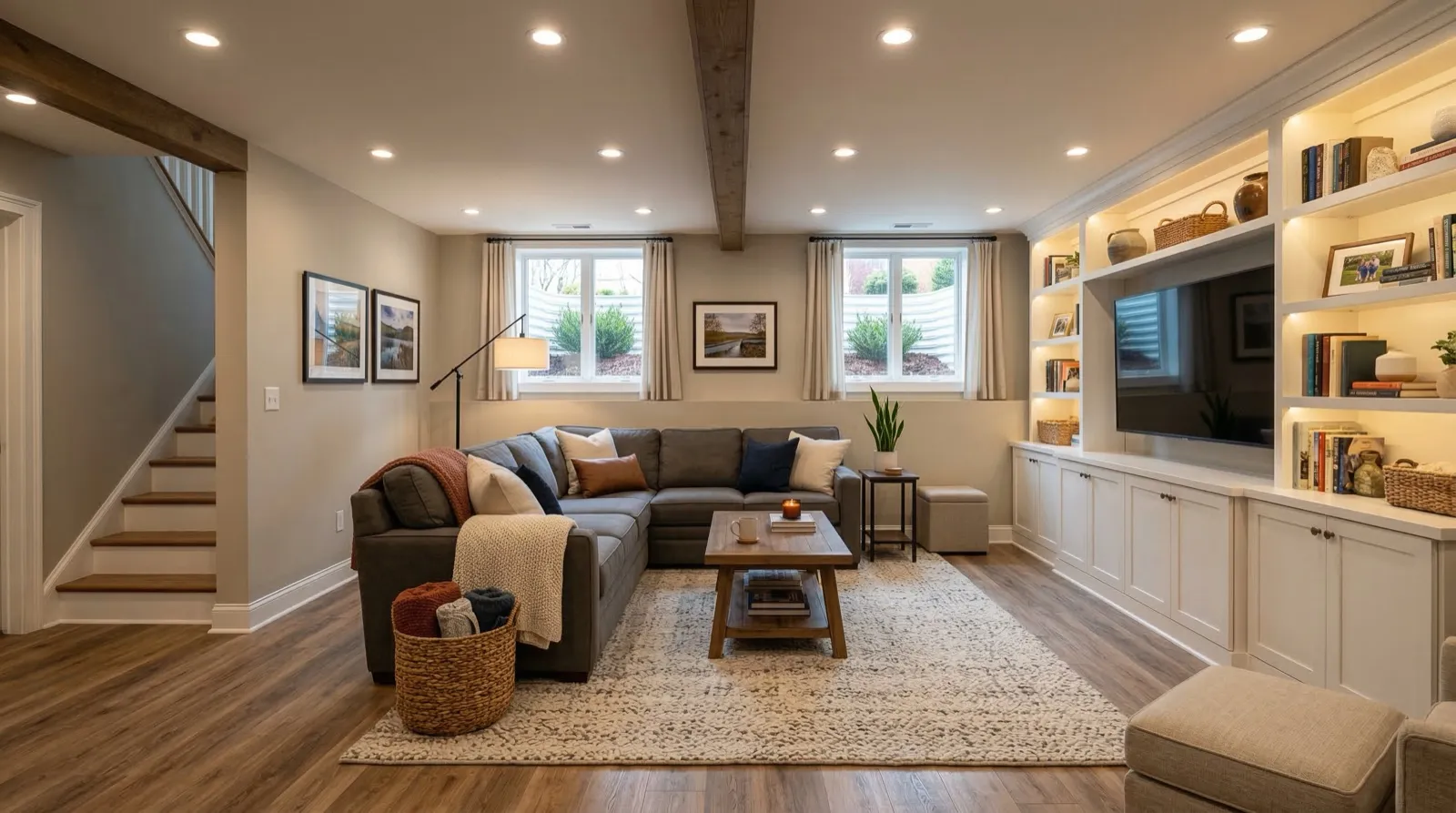
| Basic | Framing, drywall, basic flooring, lighting, paint | $25,000 - $45,000 |
| Mid-Range | Multiple rooms, upgraded flooring, bathroom rough-in | $45,000 - $70,000 |
| High-End | Full bathroom, wet bar, custom built-ins, home theater | $70,000 - $100,000+ |
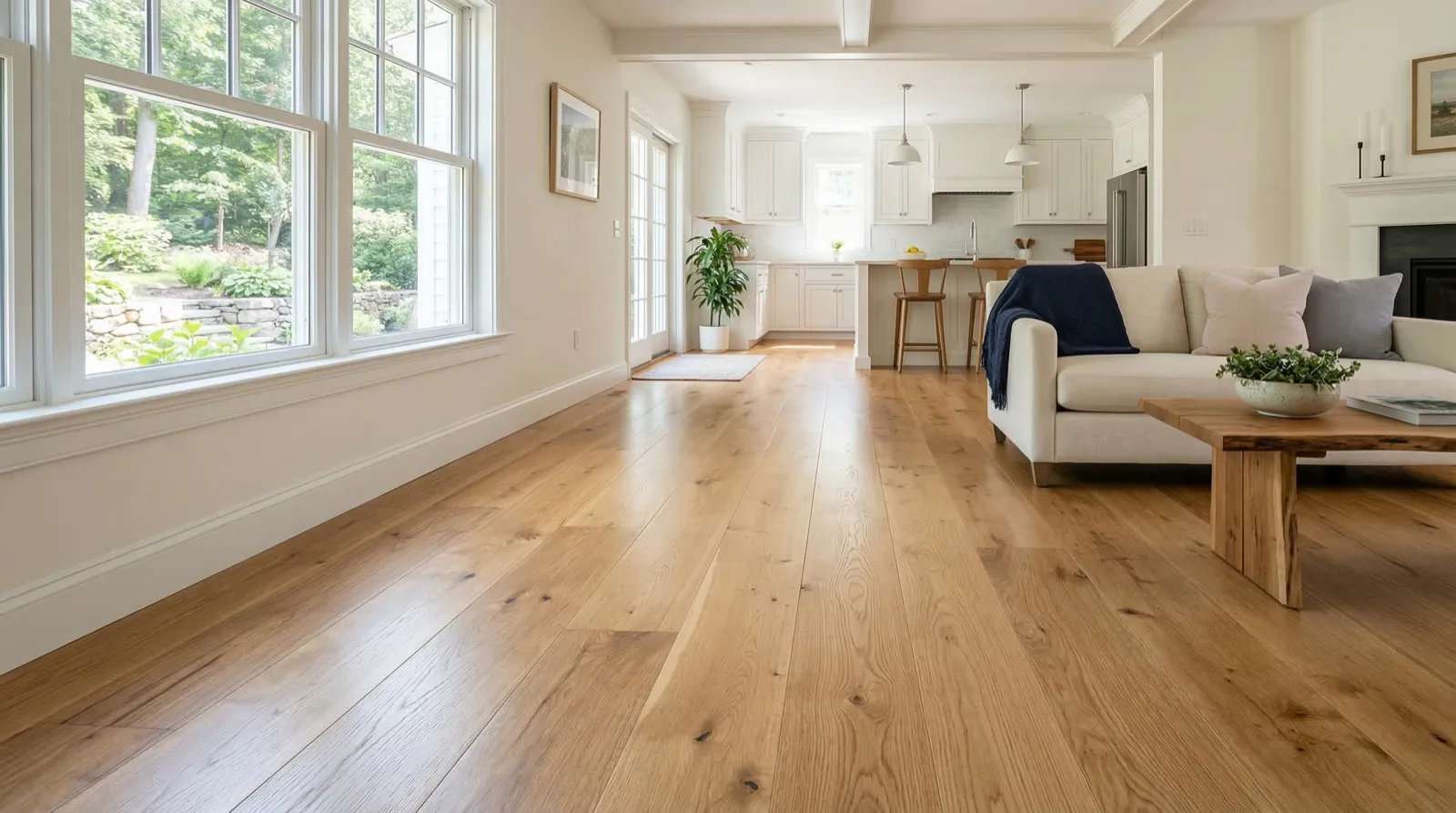
Pre-war homes with original hardwood floors under carpet or vinyl are often worth refinishing rather than replacing. We assess what is actually there and give you an honest recommendation before any material is ordered.
| Material | Best For | Installed Cost/sq ft |
|---|---|---|
| Solid Hardwood | Living rooms, dining rooms, bedrooms | $12 - $25 |
| Engineered Hardwood | Basements, moisture-prone areas | $8 - $18 |
| Luxury Vinyl Plank | Basements, kitchens, high-traffic | $6 - $14 |
| Tile | Bathrooms, kitchens, entryways | $12 - $25 |
| Carpet | Bedrooms, basement rec rooms | $4 - $12 |
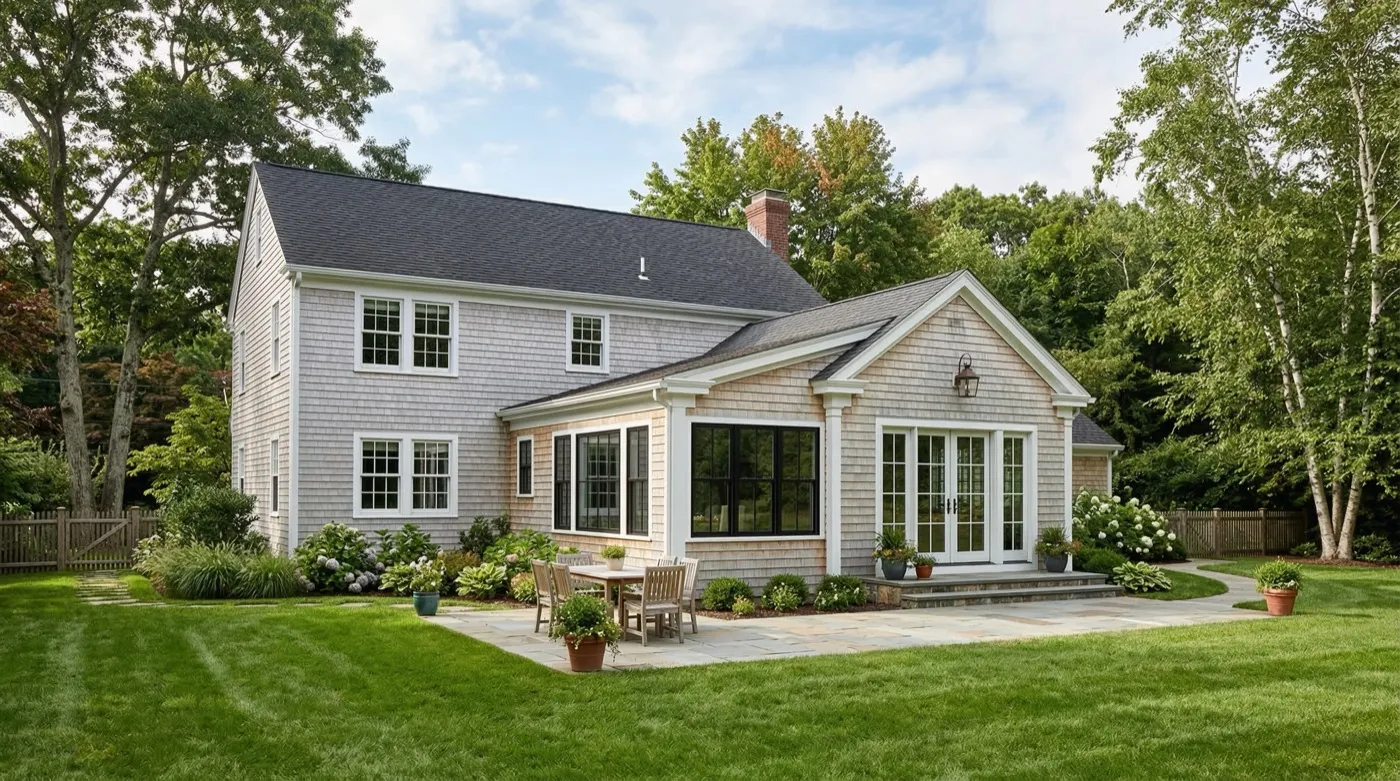
Any addition in Greenwich should carry a ledge contingency of $20,000 to $80,000 depending on rock conditions encountered during excavation. FAR limits may also constrain buildable square footage.
| Type | Scope | Typical Range |
|---|---|---|
| Bump-Out | Single-room expansion, 100-200 sq ft | $150 - $400/sq ft |
| Single-Story | Family room, sunroom, or garage conversion | $150 - $400/sq ft |
| Second-Story | Full second floor with structural support | $200 - $400/sq ft |
| Scope | Details | Typical Range |
|---|---|---|
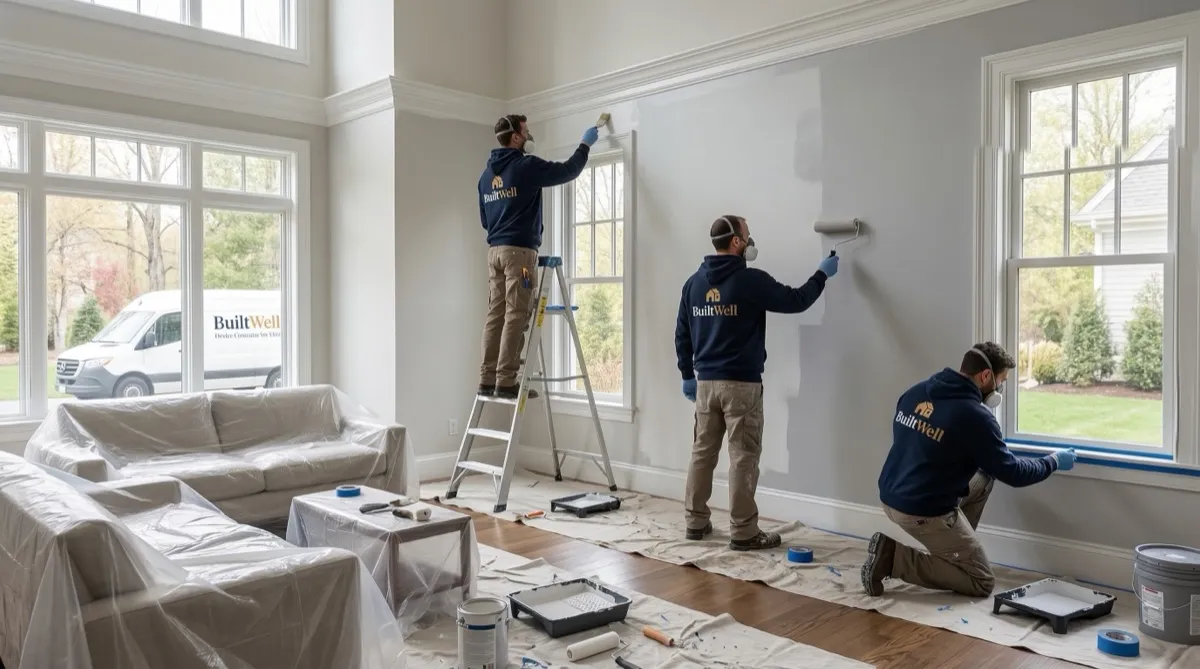
| Per Square Foot | Walls, ceilings, trim, proper surface prep | $3 - $6/sq ft |
| Single Room | Average bedroom or living room | $800 - $2,500 |
| Whole Home | Full interior, all rooms, trim, doors | $8,000 - $25,000+ |
Custom millwork to match original profiles in pre-war Greenwich homes adds both material cost and lead time. Ovolo, ogee, and beaded molding profiles from the 1890s through the 1930s cannot be matched from any lumber yard shelf in Connecticut.
| Scope | Details | Typical Range |
|---|---|---|
| Hourly Rate | Custom trim, built-ins, shelving, wainscoting | $75 - $150/hour |
| Crown Molding | Per linear foot, installed | $8 - $25/LF |
| Custom Built-Ins | Bookcases, window seats, mudroom storage | $3,000 - $15,000+ |
| Service | Details | Typical Range |
|---|---|---|
| Attic Conversions | Framing, insulation, electrical, flooring, egress | $50,000 - $150,000 |
| Decks and Porches | Wood, composite, or PVC with railings and permits | $15,000 - $75,000 |
| Design and Planning | Layout, material selection, 3D rendering, permit drawings | $2,500 - $15,000 |
| Comfort and Accessibility | Grab bars, walk-in showers, widened doorways, ramps | $5,000 - $50,000 |
| Insurance Reconstruction | Fire, water, storm damage rebuilds with carrier coordination | $25,000 - $250,000+ |
Greenwich permit fees run $13.26 per $1,000 of renovation budget with separate electrical and plumbing fees of $12 per $1,000 each, plus a 5% surcharge on pre-1940 homes. Multi-department sign-offs from Zoning, Health, the Fire Marshal, and DPW add review time. FAR limits constrain buildable square footage. Ledge rock in Back Country and Mid-Country creates excavation contingencies of $20,000 to $80,000 that less experienced contractors either miss or do not disclose. And the subcontractor network that works at the finish level Greenwich homeowners expect charges accordingly.
BuiltWell CT provides a full range of remodeling services in Greenwich including kitchen renovation, bathroom remodeling, basement finishing, flooring, home additions, interior painting, carpentry, attic conversions, decks, design, and accessibility modifications, all permitted and backed by CT HIC License #0668405.
Greenwich homes demand precision - from Belle Haven estates to downtown condos, we deliver craftsmanship that matches the standard.
Get Your Free EstimateOn-site or remote via Google Meet. No charge, no obligation.BuiltWell CT handles all Greenwich permits, multi-department sign-offs, inspection scheduling, and subcontractor coordination under CT HIC License #0668405, with daily progress updates and a five-step process covering consultation through final walkthrough. We carry full liability insurance and workers' compensation, and we do not start a project until permits are pulled and the scope is in writing with a clear timeline attached.
Our five-step process covers every project regardless of scale: Consultation, Planning, Selections, Build, and Walkthrough. You can read through the full process at /process/. In practice, what this means for a Greenwich project is that the planning phase accounts for multi-department permit review timelines, custom millwork or material lead times where applicable, and any ledge contingency work that needs to happen before the main renovation can proceed. The schedule you see in your proposal is the schedule we intend to hit.
During active construction, you receive daily updates on progress and a clean job site at the end of every workday. If something unexpected turns up inside a wall (and in pre-war Greenwich homes something unexpected turns up regularly), you hear from us that day with an explanation of what we found and your options before we proceed.
Greenwich projects are served by our Fairfield County Service Area Team. For county-level context on the full scope of what we do in this market, visit /fairfield-county/.
Greenwich homeowners most commonly ask about permit requirements, remodeling costs, project timelines, and what makes renovation more complex in pre-war homes with balloon framing, stone foundations, and custom millwork.
Yes. Nearly all kitchen remodeling projects in Greenwich require permits, and the process involves multiple town departments. The building permit fee is $13.26 per $1,000 of renovation budget. Electrical and plumbing permits each carry a separate fee of $12 per $1,000. If your home was built before 1940, a 5% surcharge applies. Before the building permit is issued, sign-offs are required from Zoning, Health, the Fire Marshal, and DPW independently. On interior projects, the review may take a few weeks. On projects involving structural changes, new square footage, or exterior modifications, it can take several months. We handle all permit applications and inspection coordination as part of every project. If your home is within a Historic Overlay or Historic Residential Overlay district, HDC Certificate of Appropriateness review is an additional required step for exterior changes.
Kitchen remodeling in Greenwich ranges from $40,000 to $400,000 or more depending on scope. A minor refresh (new cabinet doors, countertops, appliances, and paint) runs $40,000 to $80,000. A major mid-range project with new cabinets, updated floors, and a layout change runs $90,000 to $140,000. A full-custom renovation with structural changes and premium materials typically runs $200,000 to $400,000. What drives costs above statewide averages: material expectations start higher, permit fees and multi-department processing add to the budget, custom millwork to match original profiles in pre-war homes adds both cost and lead time, and any below-grade or addition work should carry a ledge contingency of $20,000 to $80,000 depending on rock conditions.
Active construction on a kitchen remodel in Greenwich typically takes 6 to 12 weeks depending on the scope of work. Custom cabinet orders, which are standard for high-end Greenwich projects, add 8 to 12 weeks of lead time before construction begins. Semi-custom cabinets reduce that window to 4 to 6 weeks. The permit process in Greenwich adds additional time before construction can start: a straightforward interior project may clear in a few weeks, while a project requiring structural review or Historic District Commission approval can take several months. We build all of these lead times into the project schedule during the planning phase so your start date reflects what is actually achievable.
Several factors combine to make Greenwich remodeling more technically demanding than most Connecticut markets. Approximately 35% of Greenwich housing units predate 1940, which means a large share of projects involve plaster-on-lath walls, balloon framing without fire blocking at floor lines, and stone foundations without modern footings. Rock ledge is present throughout elevated areas north and west of the Post Road, and hydraulic hammering rather than blasting is required, adding $20,000 to $80,000 or more to any excavation project. High water tables in Cos Cob, Byram, and coastal areas near Old Greenwich and Riverside require drainage solutions as a baseline for basement work. Original trim profiles in pre-war homes require custom millwork to match. And the permitting environment requires multi-department sign-offs from Zoning, Health, the Fire Marshal, and DPW, with HDC review adding a further step for properties in historic overlay zones.
Yes. We serve all of Fairfield County through our Fairfield County Service Area Team, and all of New Haven County through our team based in Orange, CT. Greenwich and the other Fairfield County towns (Westport, Darien, New Canaan, Stamford, Norwalk, Fairfield, and Ridgefield) are served by the Fairfield County team at (203) 919-9616. New Haven County towns including Orange, New Haven, Hamden, Branford, Guilford, Madison, Woodbridge, and Milford are served by the New Haven County team. For the full list of towns we serve across both counties, visit /areas-we-serve/.
Yes, most homeowner's insurance policies cover reconstruction after fire or water damage, though the scope of coverage depends on your specific policy and the cause of the loss. We work directly with carriers including State Farm, Liberty Mutual, Travelers, Aetna, and others that commonly insure Greenwich properties. The process starts with filing your claim and getting an adjuster assigned. From there, we coordinate directly with your insurance company on scope documentation, pricing, and supplemental requests. We handle the rebuild from demo through final inspection, and we bill the carrier directly so you are not managing payments between us and your insurer. On fire damage projects in Greenwich, reconstruction timelines typically run 3 to 6 months depending on the extent of structural damage. We hold CT HIC License #0668405 and carry the insurance requirements that carriers expect from reconstruction contractors.
The best flooring for Greenwich homes depends on the age of the house, the room, and how you use the space. Hardwood remains the most popular choice in Greenwich and typically runs $12 to $25 per square foot installed for solid oak or maple, and $15 to $35 for wider plank white oak or walnut. In pre-war homes with existing hardwood, refinishing the original floors costs $4 to $8 per square foot and preserves the character of the home. For kitchens, mudrooms, and bathrooms, large-format porcelain tile or luxury vinyl plank offers better moisture resistance than hardwood. In below-grade spaces like finished basements, we recommend engineered hardwood or luxury vinyl plank because solid hardwood can warp with the moisture conditions common in Greenwich's high water table areas near Cos Cob and Old Greenwich.
BuiltWell CT serves all 23 towns in Fairfield County through our dedicated Fairfield County Service Area Team, including Westport, Darien, New Canaan, Stamford, Norwalk, Fairfield, and Ridgefield, reachable at (203) 919-9616.

Call Fairfield: (203) 919-9616
Served by our Fairfield County Service Area Team. We cover every town in the county with dedicated local crews who know the housing stock and building departments.
On-site or remote (Google Meet or Zoom). Call (203) 919-9616 or fill out the form below.
We'll confirm your appointment details and the name of the team member visiting within one business day.


Flexible Financing Available. Get approved in about 60 seconds and start your project today.