BuiltWell CT home remodeling contractor logo
  1. Home
  2. Homeowner Hub

Homeowner Hub: Your Connecticut Remodeling Guide Connecticut Remodeling Guide

Practical information on planning, costs, permits, and how to evaluate a contractor so you go into your remodel informed.

15+
Years of Experience
100+
Completed Projects
4.9
Google Rating
Fully Bonded & Insured
Homeowner Hub

What Every Connecticut Homeowner Should Know Should Know

Connecticut remodeling projects typically cost between $15,000 and $250,000 depending on scope, require permits for any structural, electrical, or plumbing work, and take 2 to 16 weeks to complete. This page covers what you need to know before starting. We have put together practical information on planning, costs, permits, and how to evaluate a contractor. None of it is a sales pitch. If you read through this and decide another contractor is a better fit, that is fine. What matters is that you go into a remodel informed.

Getting Started

Plan Your Project

Planning a Connecticut remodel requires defining the scope of work, setting a realistic budget, scheduling around 8 to 12 week cabinet lead times, and confirming which permits your town requires before construction begins.

Scoping the Work

Scoping a project well starts with separating what you want from what the space actually needs. A kitchen that looks dated may only need new countertops, paint, and hardware - a cosmetic refresh. Or the layout may not work for how you use it, the electrical panel may be undersized for modern appliances, and the subfloor may need attention before any finish materials go in. Those are two very different projects with very different costs. A contractor who looks at your space carefully before writing a proposal can tell you which situation you are in. A contractor who quotes from a photo cannot.

Cosmetic vs. Structural

Cosmetic work such as painting, hardware, light fixtures, and some flooring can often be planned and started quickly. Structural work such as moving walls, adding or relocating plumbing, upgrading electrical, or adding square footage involves permits, licensed trade subcontractors, and longer timelines. It is worth knowing early which category your project falls into, because it affects your budget, your timeline, and your planning.

Lead Times and Timing

Timing is a real factor in Connecticut. Custom cabinet lead times run 8 to 12 weeks from order to delivery. For more on kitchen project timelines, see our kitchen remodeling page. If your project needs custom cabinets, that lead time has to be built into the schedule before construction begins. Projects planned in the fall for spring starts need to account for that window.
Budgeting

What Drives Remodeling Costs in Connecticut

Remodeling costs in Connecticut are driven by five factors: scope of work (cosmetic vs. structural), material selections (30 to 40 percent of budget), local labor rates, your home's age and condition, and geographic location within the state. Here is what actually moves the price.

Scope: Cosmetic vs. Structural

The single biggest cost driver is the scope of work. A cosmetic refresh - new countertops, cabinet hardware, paint, and a backsplash - is a fundamentally different project than a gut renovation that moves plumbing, upgrades the electrical panel, and opens up a load-bearing wall. Cosmetic work typically stays in the lower third of any price range. Once you start touching structure, plumbing, or electrical, you cross into a different category of cost, timeline, and permit requirements.

Material Selections

Materials account for 30 to 40 percent of most remodeling budgets. The gap between stock cabinets and custom cabinets can be $15,000 to $40,000 on the same kitchen. Quartz and granite countertops range from $50 to $150 per square foot installed. Tile can run $8 per square foot or $35 per square foot depending on what you choose. These are not upsells - they are choices that affect how the finished space looks, feels, and holds up over time. A good contractor helps you understand where to invest and where to save based on how you use the space.

Labor Market in Connecticut

Connecticut has some of the highest labor costs in the country for skilled trades. Licensed electricians, plumbers, and HVAC technicians are in demand and command rates that reflect that. Learn more about how we manage trade coordination on our process page. This is not something a contractor controls. It is a market reality. Any quote that seems dramatically lower than others should prompt the question: who is actually doing the work, and are they licensed?

Age and Condition of Your Home

This is the factor that surprises homeowners the most. A home built in 1960 is not the same as a home built in 2005. Older Connecticut homes frequently have undersized electrical panels, galvanized or copper plumbing that needs replacement, knob-and-tube wiring in walls, asbestos-containing floor tile, and subfloor damage from decades of minor water intrusion. None of these are visible from the surface. A thorough pre-construction assessment catches many of them, but some conditions only become visible once demolition starts. Written change orders before any additional work proceeds are the honest way to handle this.

Geographic Variation Within Connecticut

The same kitchen remodel costs differently in Greenwich than it does in New Haven. This is driven by local labor rates, material expectations, the age and style of the housing stock, and what neighboring properties look like. Fairfield County coastal towns tend to run higher across the board. New Haven County projects often involve older housing stock with more remediation work but lower finish expectations. Neither is better or worse - they are different markets with different cost structures.
One cost-saving resource many Connecticut homeowners overlook: Energize CT offers rebates on qualifying insulation, HVAC, and appliance upgrades. Eversource Home Energy Solutions also provides free home energy audits that can identify efficiency improvements before your remodel begins. If your project touches insulation, windows, heating, or cooling, it is worth checking what programs are currently available.

How to Use This Information

Understanding what drives costs helps you have a more productive first conversation with any contractor. Instead of asking "how much does a kitchen cost," you can ask about your specific scope, your specific home, and your specific material preferences. That conversation leads to a real number - not a range pulled from a website. For detailed pricing by service type, visit our services page.
Permits and Codes

Permits and Building Codes in Connecticut

Connecticut requires building permits for any remodeling work involving structural changes, electrical, plumbing, or HVAC modifications, with separate permits often needed for each trade and inspections required at multiple stages.

What Requires a Permit

  • Structural changes (removing or adding walls)
  • Electrical work beyond simple fixture swaps
  • Plumbing beyond fixture replacements
  • HVAC additions or modifications
  • Egress window installations
  • Basement finishing creating habitable space
  • Roofing replacement or repair
  • New window or door openings
  • Deck or porch construction

What Does NOT Require a Permit

  • Painting interior or exterior surfaces
  • Flooring over existing subfloor
  • Cabinet replacement (same layout)
  • Countertop replacement
  • Hardware and fixture swaps
  • Landscaping and grading
  • Trim and molding replacement
  • Wallpaper installation or removal
  • Appliance swaps in existing hookups
We handle all permits for you. We prepare and submit all permit applications, account for review timelines, and manage every inspection. You do not need to interact with the building department.

Unpermitted work creates legal and financial risk. If you sell your home, a title search or buyer inspection can flag unpermitted improvements. The town can require you to remove or redo the work. Always verify that your contractor pulls the proper permits. Verify any contractor at the CT DCP online license lookup. Our license: CT HIC #0668405.

Contractor Checklist

How to Choose a Remodeling Contractor

Choosing a Connecticut remodeling contractor requires verifying their CT HIC license at the Department of Consumer Protection, confirming general liability and workers comp insurance, and reviewing a written line-item proposal before signing any agreement.

1

Verify CT HIC License

Ask for the number. Look it up at CT Department of Consumer Protection. A current license means traceable legal identity and state requirements met.

2

Confirm Insurance

Ask for general liability and workers comp certificates. If a worker is injured and the contractor has no workers comp, you can be exposed to a liability claim.

3

Written Line-Item Proposal

A single number is not a proposal. A real proposal describes full scope, timeline, permits, payment schedule. Vague language becomes disagreements later.

4

Check Reviews

Look at volume and recency, not just star rating. Read the 1 and 2 star reviews. Pay attention to how the contractor responds to negative reviews.

5

Ask About Communication

Who is your point of contact? How often will you hear from them? How are change orders handled? Daily updates should be the standard.

6

Understand Payment Terms

Be cautious of anyone asking more than 30-40% upfront or final payment before the walkthrough is complete.

7

Ask Who Does the Work

Some companies subcontract everything. Others maintain consistent crews. Consistent crews produce more consistent work.

Accessibility

Aging in Place Remodeling in Connecticut

Aging in place remodeling in Connecticut costs between $5,000 and $50,000 and typically includes wider doorways, curbless showers, grab bar blocking, and first-floor accessibility modifications for homes built before current ADA standards. Connecticut has one of the highest concentrations of residents over 50 in the country. Many of them live in homes built decades ago - homes designed without a single thought toward accessibility. Narrow doorways, raised thresholds, steep staircases, bathtubs with high sides, and second-floor-only bedrooms are standard in the housing stock across Fairfield and New Haven Counties. These are not design flaws. They are features of an era that did not anticipate the reality: most people want to stay in their homes as they age, and most homes are not set up for that.

Aging in place remodeling is the practice of modifying a home so it remains safe, functional, and comfortable as the homeowner's mobility changes. It is one of the fastest-growing segments of residential construction nationally, a $5.3 billion market projected to exceed $9 billion by 2032. But the best time to do this work is before you need it.

Universal Design vs. Medical Retrofits

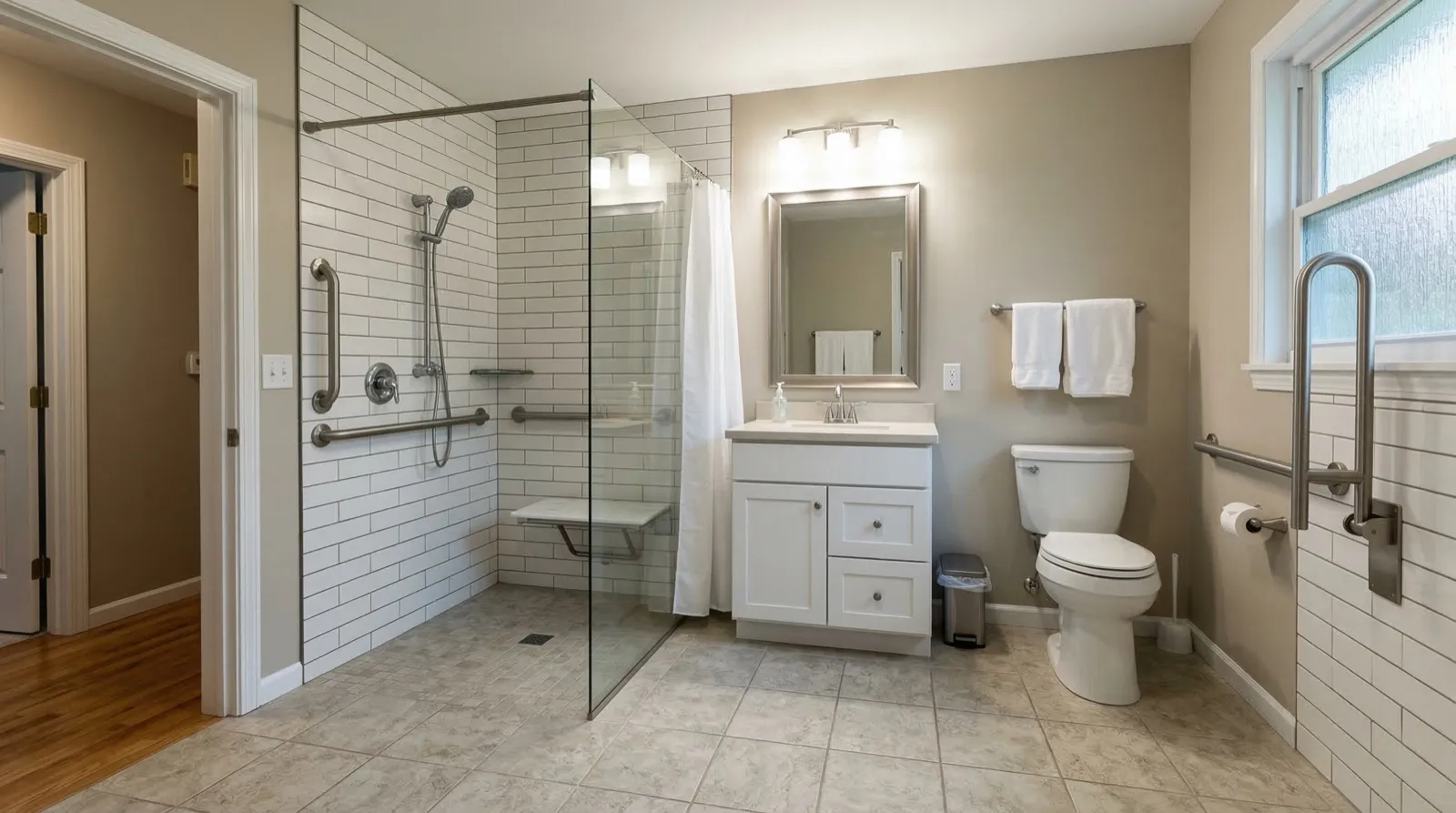
There is a meaningful difference between universal design and medical retrofit. A medical retrofit is reactive - installing grab bars, ramps, and stair lifts after an injury or diagnosis. Universal design is proactive. It builds accessibility into the home in a way that looks and feels like thoughtful design, not accommodation. A curbless shower is universal design. A teak fold-down bench in that shower is universal design. A 36-inch doorway is universal design. None of these look clinical. All of them make the home work better for everyone - not just someone recovering from surgery.

Bathrooms

  • Curbless (zero-threshold) shower entry
  • Built-in shower bench or teak fold-down seat
  • Grab bars integrated into tile design
  • Comfort-height toilet (17-19 inches)
  • Non-slip tile flooring throughout
  • Handheld showerhead on adjustable slide bar
  • Lever-handle faucets instead of knobs

Kitchens

  • Varied counter heights (30" and 36") for seated use
  • Pull-out shelving in lower cabinets
  • D-shaped cabinet pulls (easier grip than knobs)
  • Side-opening wall oven at counter height
  • Touch-activated or lever faucets
  • Task lighting under every cabinet run
  • Anti-fatigue flooring in work zones

Entryways and Hallways

  • No-step entry (flush threshold or ramp)
  • 36-inch minimum doorway widths
  • Lever door handles throughout
  • Motion-sensor exterior and interior lighting
  • Covered entry for weather protection
  • Smooth flooring transitions (no raised thresholds)

Stairs and Floor Transitions

  • First-floor bedroom and full bathroom
  • Stair treads with contrast nosing
  • Continuous handrails on both sides
  • Pre-wired for future stair lift installation
  • Adequate lighting at top and bottom landings
  • Laundry relocated to main level if feasible
Accessible home remodeling in Connecticut with curbless shower, wider doorways, and universal design by BuiltWell CT

Connecticut's Older Housing Stock

Connecticut's housing stock makes aging in place remodeling both more necessary and more complex than in newer-construction states. The median home age across our service area is well above the national average. Fairfield County colonials from the 1950s and 1960s commonly have 28-inch doorways, steep basement stairs, second-floor-only bathrooms, and electrical panels that cannot support modern accessibility additions without upgrades. New Haven County cape-style homes present similar challenges - bedrooms accessed only by narrow staircases, bathrooms too small for turning radius, and load-bearing walls between the rooms that need to be connected.

This is not a reason to avoid the work. It is a reason to hire a contractor who understands structural modification, not just finish carpentry. Widening a doorway in a load-bearing wall requires a properly sized header, proper support during construction, and a building permit. It is straightforward work for a crew that does it regularly.

When to Start Planning

The best answer is: before you need to. If you are already planning a kitchen or bathroom remodel, incorporating universal design features at that point costs a fraction of what it would cost to retrofit later. Adding blocking behind drywall for future grab bars during a bathroom renovation is nearly free. Widening a doorway during a room reconfiguration adds marginal cost. Installing a curbless shower instead of a tub-shower combo during a bathroom gut is a design choice, not an upcharge.

The expensive version is doing all of this work reactively, after a fall, after a diagnosis, after the need is urgent. Reactive work happens on compressed timelines with fewer design options and higher costs. Planning ahead gives you better outcomes at lower cost.

Getting Started

If you are considering aging in place modifications - whether as part of a larger remodel or as a standalone project - the first step is an in-home assessment. We walk through your home, identify the highest-impact modifications for your situation, and provide a clear scope and cost. No charge, no obligation. Schedule a free consultation or call us directly.
Funding and Assistance

Connecticut Programs for Accessibility Modifications

Connecticut homeowners can access six funding sources for accessibility modifications, including the CT Home Care Program, USDA Section 504 grants up to $10,000, VA housing grants, and IRS medical expense deductions for prescribed modifications.

CT Home Care Program

Administered by the CT Department of Social Services, this Medicaid waiver program covers home modifications for eligible seniors and adults with disabilities. Covered modifications include ramps, grab bars, walk-in tub conversions, and widened doorways. Eligibility is based on income and level of care need.

USDA Section 504 Grants

Available to very-low-income homeowners age 62 and older. Grants up to $10,000 for removing health and safety hazards including accessibility modifications. Repair loans up to $40,000 at 1% fixed interest are also available. Eligible in qualifying rural CT areas.

VA SAH / SHA Grants

Veterans with service-connected disabilities may qualify for SAH grants up to $109,986 or SHA grants up to $44,299. Covers wheelchair ramps, roll-in showers, widened doorways, lowered countertops, and accessible kitchen layouts. Requires a qualifying VA disability rating.

Area Agencies on Aging

Connecticut's five Area Agencies on Aging administer local programs for home modification assistance. Common covered modifications include grab bars, threshold ramps, handrails, and bathroom safety improvements. Contact your local AAA for current availability in your county.

Medical Expense Deduction

Home modifications prescribed by a physician as medically necessary may qualify as deductible medical expenses on federal taxes. Qualifying modifications include grab bars, ramps, widened doorways, stair lifts, and curbless showers. Total medical expenses must exceed 7.5% of your adjusted gross income. Consult a CPA before your project begins.

GreenSky Financing

Flexible financing for homeowners who do not qualify for assistance programs. Get approved in about 60 seconds with competitive rates and manageable monthly payments. Available for all BuiltWell projects. Multiple loan terms, no prepayment penalty, and you can apply online or during your consultation.

Energize CT Rebates

Administered by Eversource and United Illuminating, Energize CT offers rebates on insulation, HVAC upgrades, heat pumps, and energy-efficient appliances. The Home Energy Solutions program provides energy assessments and instant rebates on air sealing and insulation. Check eligibility before construction begins.

FHA 203(k) Rehab Loan

Finance both a home purchase or refinance and renovation costs in a single mortgage. The Standard 203(k) covers major remodeling over $5,000 with no max limit. The Limited 203(k) covers improvements up to $35,000. Requires an FHA-approved lender and licensed contractor.

Where We Work

Our Service Areas

We serve 16 towns across Fairfield County and New Haven County with dedicated local crews, covering every community from Greenwich to Madison and headquartered in Orange, CT.

Fairfield County, Connecticut - home remodeling service area for BuiltWell CT

Fairfield County

Call: Fairfield: (203) 919-9616

Serving all of Fairfield County with dedicated local crews. From Greenwich estates to Ridgefield colonials, we know the housing stock and building departments across the county.

GreenwichStamfordNorwalkWestportDarienNew CanaanFairfieldRidgefield
TrumbullBethelBridgeportBrookfieldDanburyEastonMonroeNew FairfieldNewtownReddingSheltonShermanStratfordWestonWilton
Learn more about Fairfield County
New Haven County, Connecticut - home remodeling service area for BuiltWell CT

New Haven County

Call: New Haven: (203) 466-9148

Served from our Orange, CT office. We cover every town in New Haven County from coastal Branford and Madison to inland Woodbridge and Cheshire - delivering expert remodeling across the region.

OrangeNew HavenHamdenBranfordGuilfordMadisonWoodbridgeMilford
CheshireAnsoniaBeacon FallsBethanyDerbyEast HavenMeridenMiddleburyNaugatuckNorth BranfordNorth HavenOxfordProspectSeymourSouthburyWallingfordWaterburyWest HavenWolcott
Learn more about New Haven County

Not sure if we cover your area? Contact our Connecticut remodeling team and we will let you know.

Get in Touch

Ready to Start Your Remodeling Project?

On-site or remote (Google Meet or Zoom). Tell us about your project. We respond within one business day. No obligation.

Fairfield County: (203) 919-9616 | New Haven County: (203) 466-9148

BuiltWell CT owner meeting with a Connecticut homeowner for a remodeling consultation
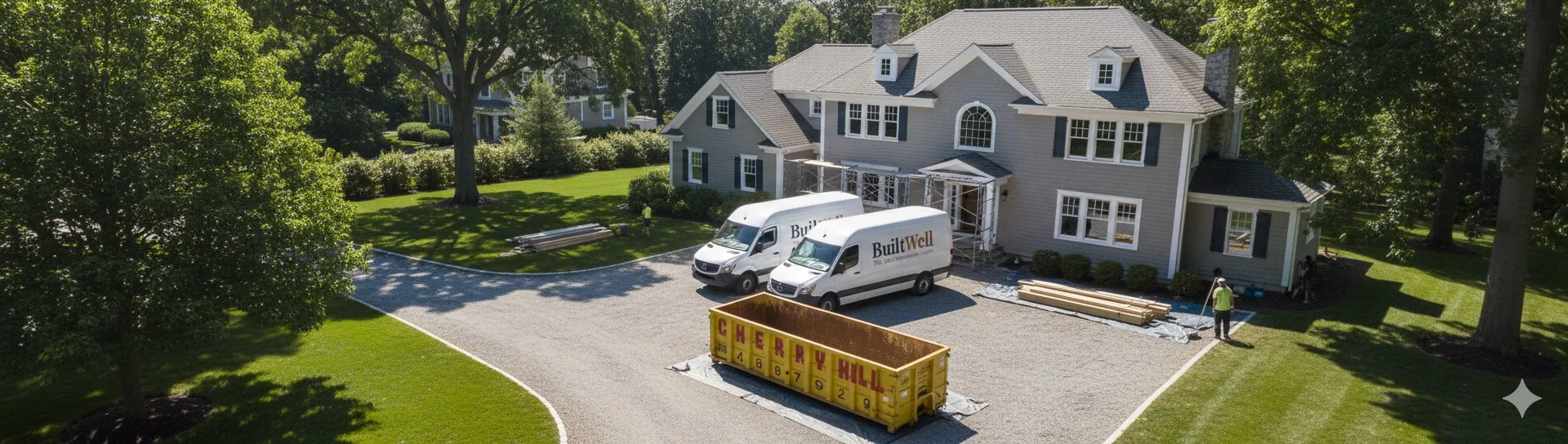
BuiltWell CT job site with two vans at a Connecticut home renovation
Preferred Contact Method *

We'll send a confirmation to your email within 24 hours.

Flexible Financing Available. Get approved in about 60 seconds and start your project today.

Check Financing Options