
BuiltWell CT home remodeling contractor logo
  1. Home
  2. Areas We Serve
  3. New Haven County
  4. New Haven, CT

Home Remodeling in New Haven, CT

Home remodeling in New Haven, CT for pre-war homes, Victorians, and modern builds. Licensed New Haven County contractor with crews who understand older housing stock.

15+
Years of Experience
100+
Completed Projects
4.9
Google Rating
Fully Bonded and Insured
New Haven Remodeling

Professional Home Remodeling in New Haven, CT

Home remodeling in New Haven, CT costs $25,000 to $150,000 or more depending on scope and which neighborhood you're in. East Rock Victorians and Wooster Square townhouses regularly add $15,000 to $40,000 in pre-war remediation costs on top of the base remodel. The city's housing stock is older, denser, and structurally more demanding than nearly anywhere else in Connecticut. We hold CT HIC License #0668405 and serve New Haven from our Orange, CT office.

Ready to discuss your New Haven renovation?

In-home visit or remote via Google Meet or Zoom. No obligation.

Get Your Free Estimate

Or call New Haven County: (203) 466-9148

Housing Stock

New Haven's Housing Stock: What You're Working With

New Haven's housing stock is unlike any other Connecticut city: 40.8% of homes were built before 1940, the median construction year is 1952, and duplexes and converted apartments make up 40.87% of occupied units. Single-family detached homes account for only 19.85% of the city's housing. That profile shapes every renovation project in this city.

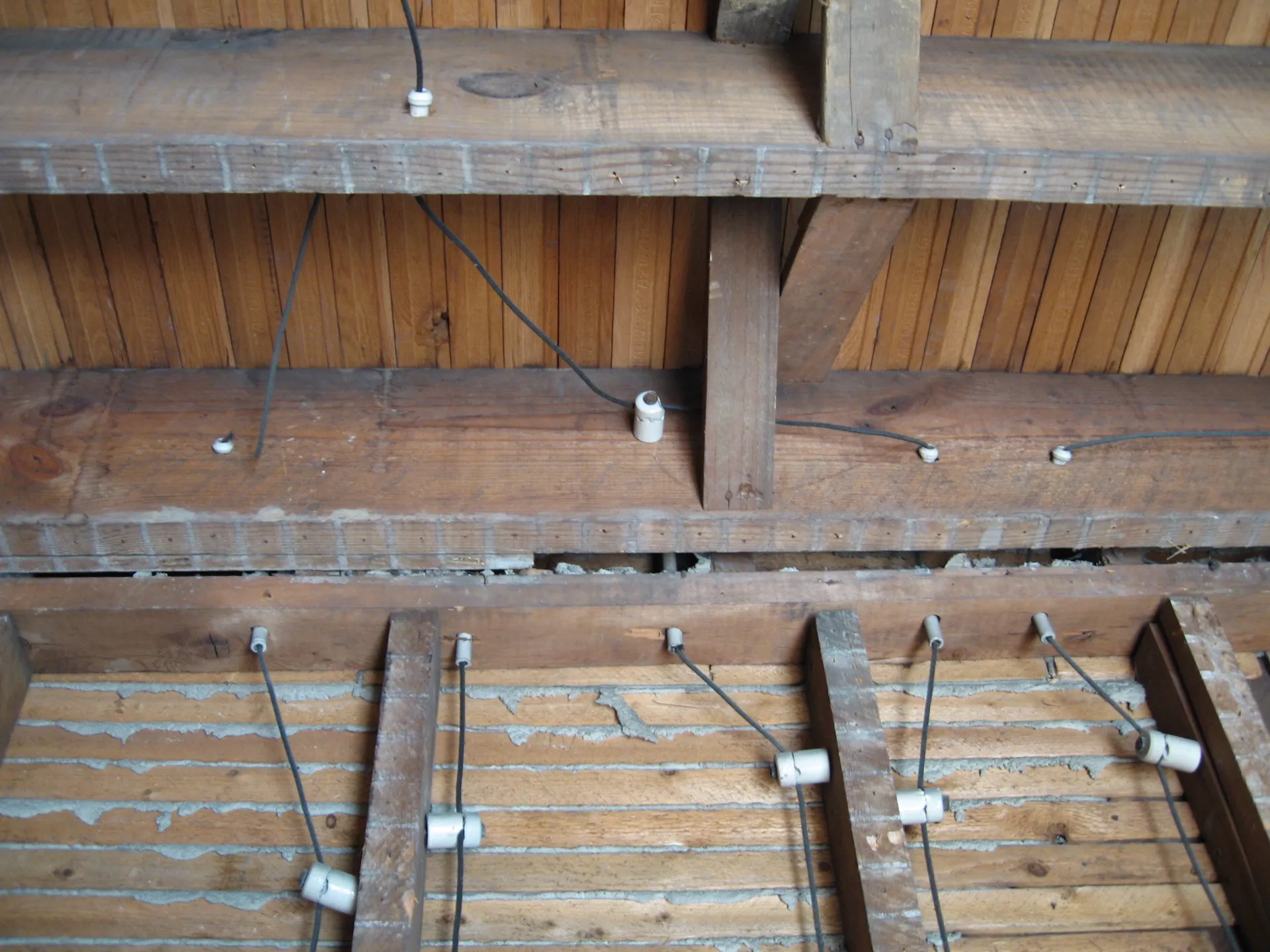
Knob-and-tube wiring on exposed wood framing in pre-1930 New Haven CT home

Balloon Framing, Plaster Walls, and Knob-and-Tube Wiring

Homes built before roughly 1930 in New Haven overwhelmingly use balloon framing, where studs run continuously from the foundation sill to the roof ridge without horizontal blocking at the floor lines. When we open these walls, fire blocking installation is required before they are closed again. This is not optional under current code.

Virtually every pre-1940 home has three-coat plaster on wood lath rather than drywall. Knob-and-tube wiring is common in pre-1945 homes and cannot be covered with insulation. CT code requires replacement during any significant renovation. A full rewire in a typical New Haven Victorian multifamily runs $15,000 to $30,000.

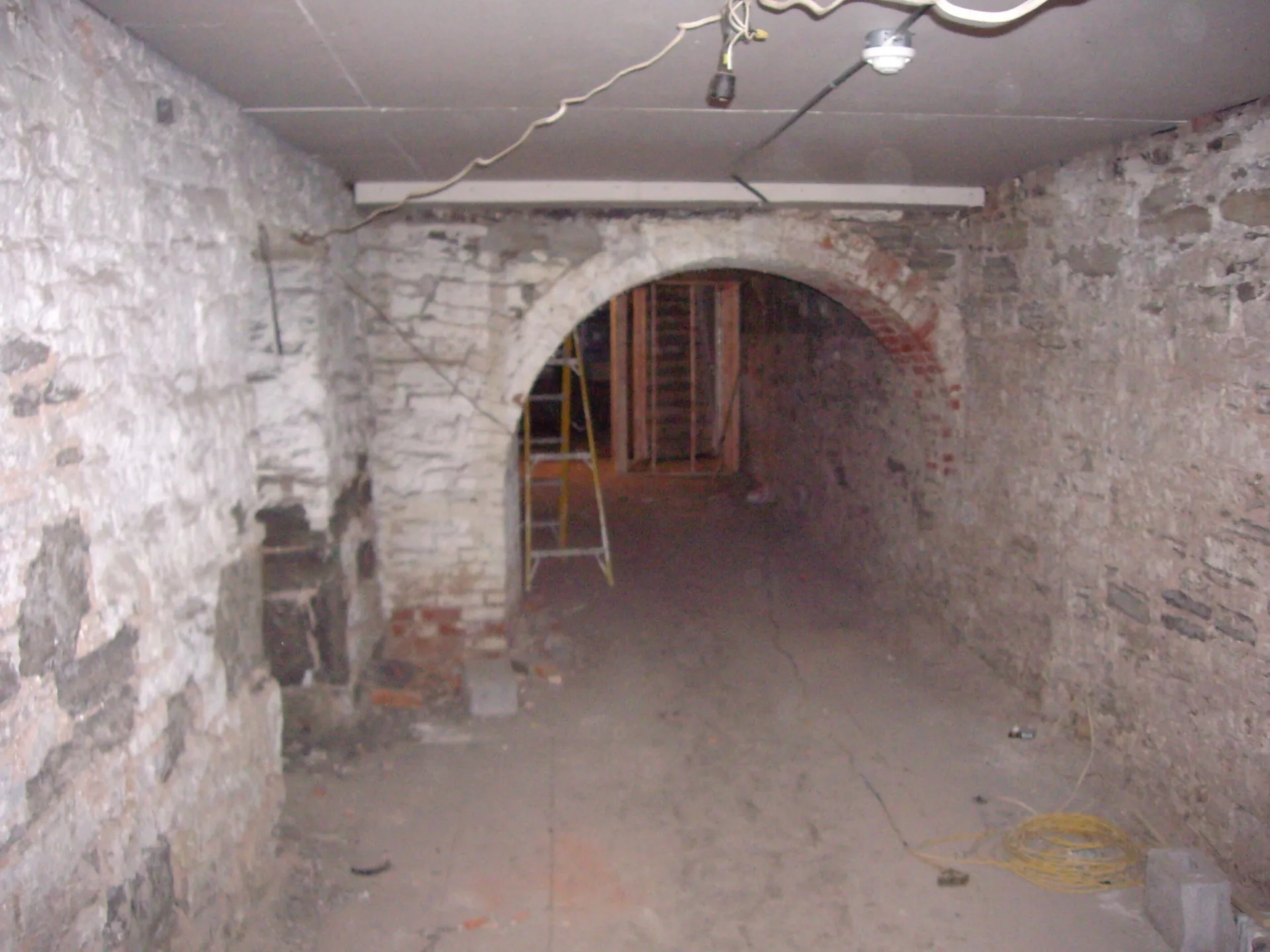
Stone and brick foundation walls in basement of pre-1900 New Haven CT home

Stone Foundations and Lead Paint

Pre-1900 homes in New Haven typically have stone foundation walls, usually dry-laid fieldstone or mortared rubble with dirt or brick floors. Stone foundations transmit moisture readily. Converting a stone-foundation basement to usable living space requires an interior drainage system, vapor barriers, and potentially underpinning before any framing can go up.

Pre-1940 homes in New Haven almost certainly contain lead paint, often with multiple layers accumulated over a century. Federal EPA RRP rules apply to any project disturbing more than six square feet of interior painted surface per room. Contractors must carry EPA RRP certification. We do.

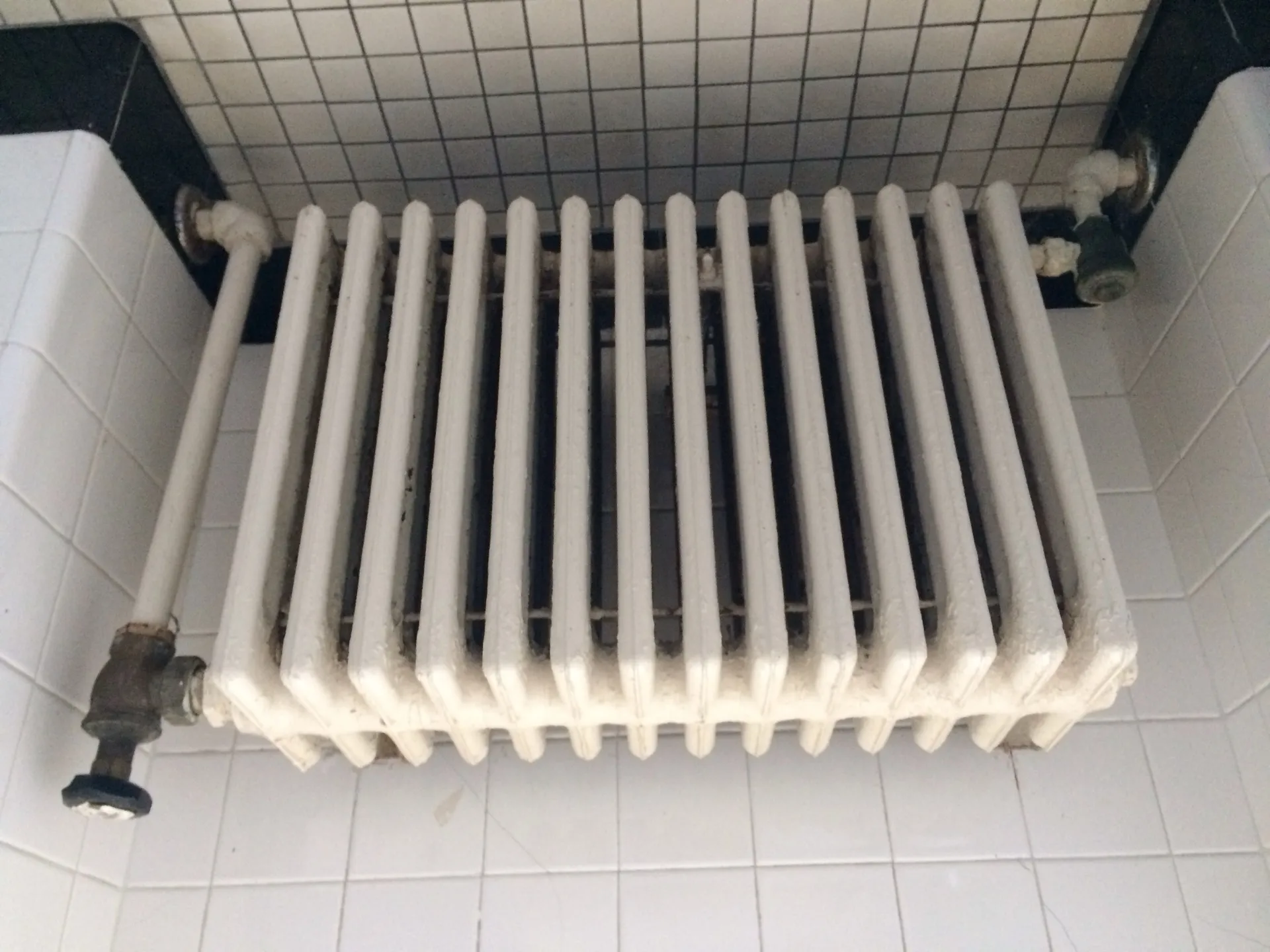
Cast iron steam radiator typical of Victorian-era heating systems in New Haven CT homes

Steam Heat and Asbestos-Containing Materials

Victorian homes in New Haven overwhelmingly use steam heat rather than forced air, typically one-pipe or two-pipe steam systems with cast iron radiators. Steam boiler replacement is a specialty trade that requires specific knowledge. Converting from steam to mini-split heat pumps involves additional planning that goes beyond a standard HVAC swap.

Asbestos-containing materials appear in predictable locations: pipe insulation on steam heating systems, 9-inch vinyl floor tiles from the 1950s through the 1970s, ceiling tiles, plaster additives, and roofing shingles. Connecticut DPH requires a licensed abatement contractor for removal above threshold quantities. Many routine renovation tasks trigger pre-renovation testing.

Permits and Approvals

Permitting and Approvals in New Haven, CT

All permits for home remodeling in New Haven are submitted through an online-only portal at the New Haven Building Department, located at 165 Church Street. Paper applications are not accepted, and the standard approval or denial timeline is 30 days by state law.

Express permits, which cover simpler scope work and require no plan review, are issued instantly through the portal. For properties in a local historic district, Historic District Commission review must be completed and a Certificate of Appropriateness issued before any building permit can proceed. Any structural work requires plans stamped by a Connecticut-licensed architect or engineer before the application will be accepted.

Local Historic Districts: Mandatory Review

Three New Haven neighborhoods are covered by local historic district status, which means a Certificate of Appropriateness from the HDC is legally required before any exterior architectural change can be made. These are not voluntary guidelines. They are mandatory approvals that precede the building permit process.

Wooster Square Historic District (established 1970, New Haven's first local historic district) requires Certificate of Appropriateness review for all exterior changes including windows, doors, siding, and exterior architectural features. Contact the HDC at hdc@newhavenct.gov to begin the review process before any work is planned. City Point/Oyster Point Historic District (established 2001) and Quinnipiac River Historic District (established 1977) carry the same mandatory requirements.

National Register Districts: No Mandatory Review

East Rock (Whitney Avenue Historic District), Beaver Hills Historic District, Prospect Hill Historic District, Upper State Street, Orange Street, and Westville Village Historic District are all listed on the National Register. National Register listing does not impose any mandatory review on exterior changes for privately owned residential properties. However, it does make these properties eligible for Connecticut state historic tax credits on qualified rehabilitation work. If your home is in one of these National Register districts, it is worth speaking with your tax advisor about whether your project scope qualifies for the credit.

We handle all permit applications, plan coordination, and HDC submissions where applicable as part of every project we take on in New Haven.

Investment

What Remodeling Costs in New Haven, CT

Home remodeling in New Haven, CT costs $25,000 to $150,000 or more for a primary service project, with the specific neighborhood and age of the housing stock being the two variables that most significantly affect where a project lands within that range.

New Haven's renovation costs are generally lower than Westport or Greenwich, but the renovation complexity per dollar can be higher because the housing stock is older and the pre-war remediation items are more prevalent. A kitchen remodel in a 1920s East Rock Victorian is not the same project as a kitchen remodel in a 1970s Milford colonial of comparable square footage. The East Rock project may carry $15,000 to $40,000 in additional costs for lead abatement, knob-and-tube rewiring, and steam system work before the first cabinet goes in.

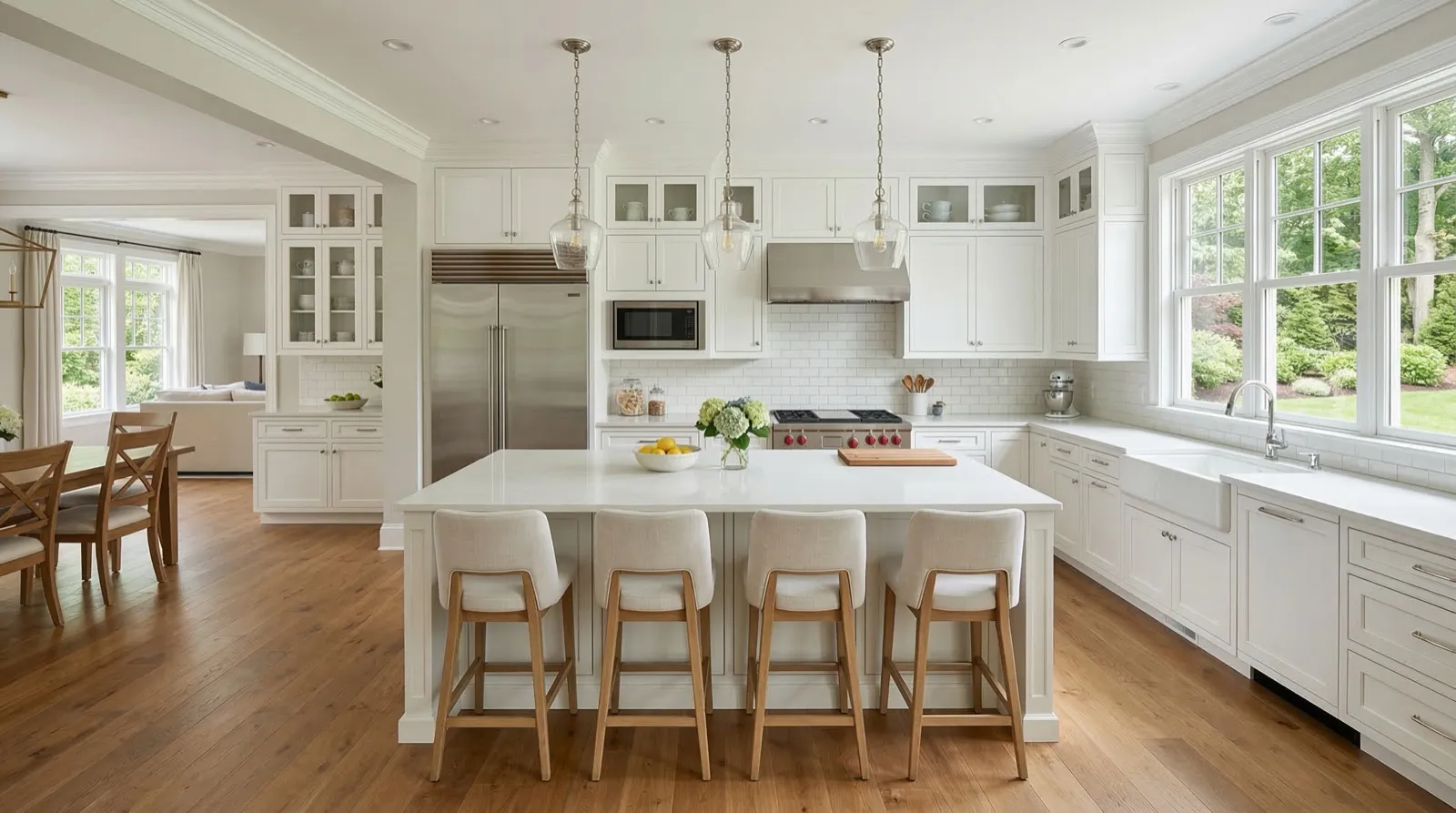
Kitchen Remodeling Costs in New Haven, CT

TierScopeTypical Range
Basic RefreshCabinet refacing, new countertops, appliances, paint$25,000 - $50,000
Mid-RangeNew cabinets, countertops, flooring, appliances, lighting$50,000 - $90,000
High-EndFull custom, layout changes, premium materials$90,000 - $150,000+

Pre-war premium: In East Rock, Prospect Hill, Wooster Square, Beaver Hills, and Westville, projects in the older housing stock routinely add $15,000 to $40,000 to the above ranges for lead abatement, knob-and-tube rewiring, asbestos testing and licensed abatement where required, and steam system coordination.

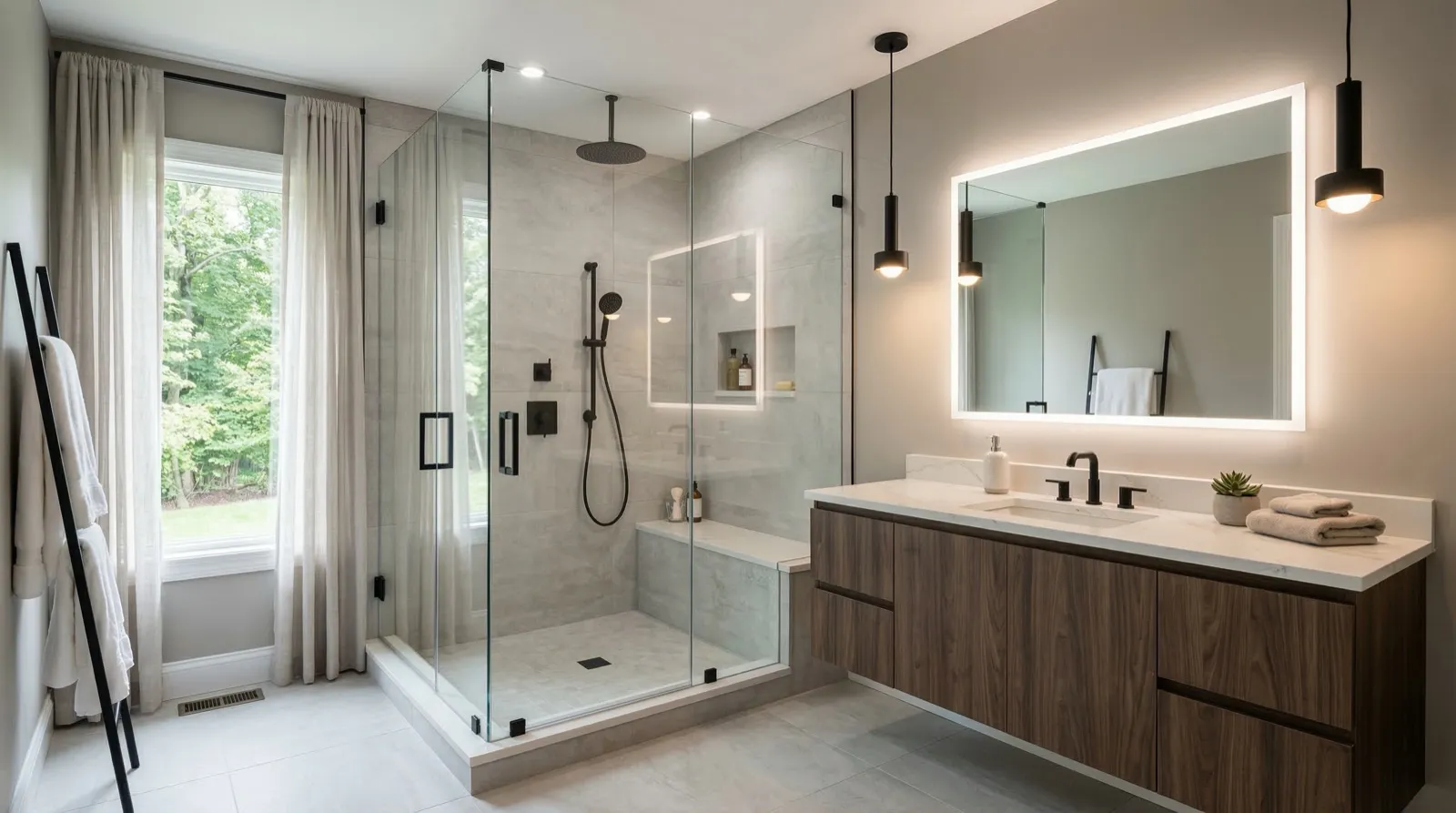
Bathroom Remodeling Costs in New Haven, CT

TierScopeTypical Range
BasicNew fixtures, vanity, flooring, paint$15,000 - $25,000
Mid-RangeFull gut, new tile, shower or tub, vanity, lighting$25,000 - $55,000
High-EndLayout changes, premium fixtures, custom tile$55,000 - $80,000+

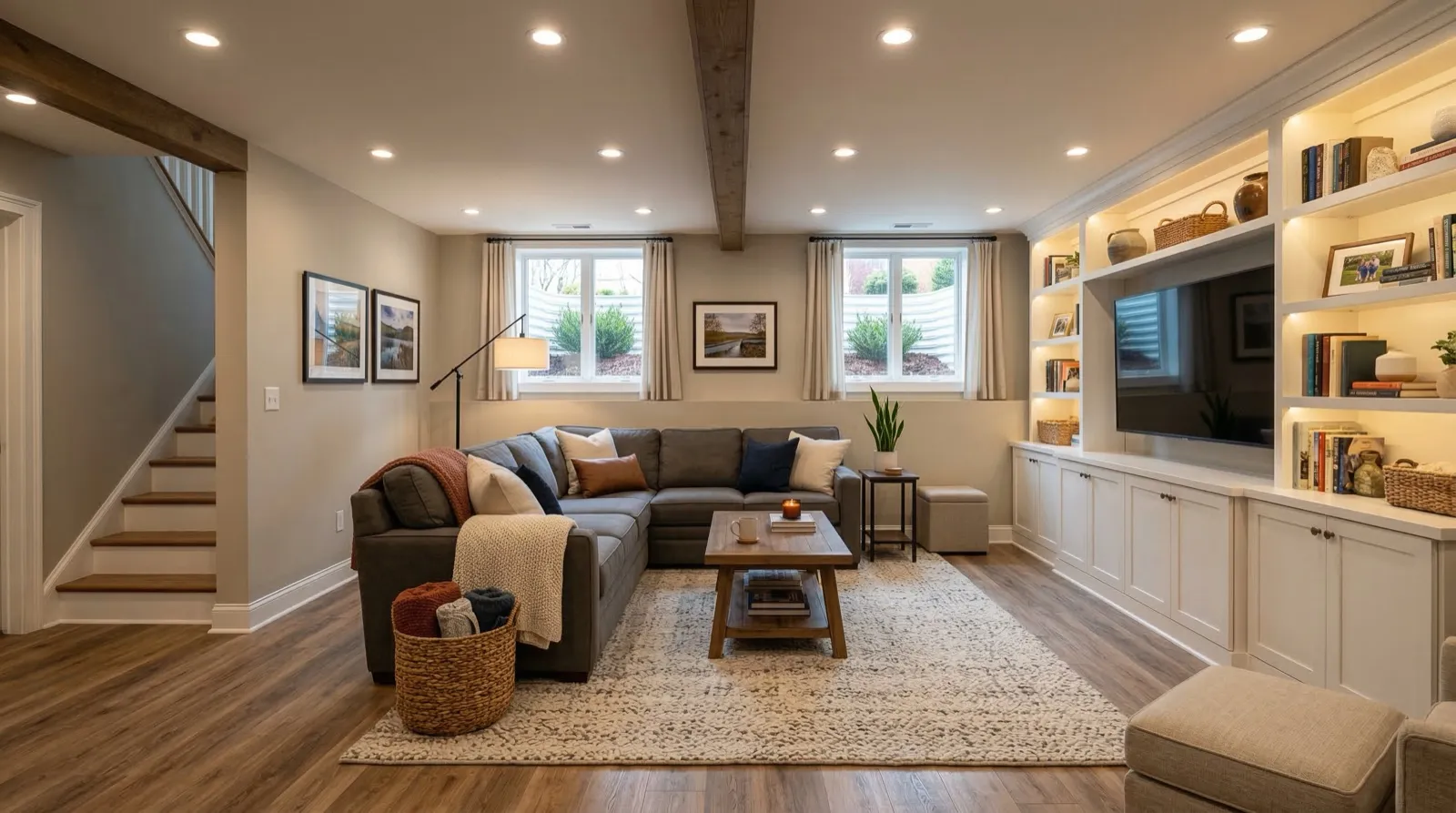
Basement Finishing Costs in New Haven, CT

Stone foundation basements in pre-1900 New Haven homes require moisture assessment and often interior drainage systems before framing begins. That work is scoped and priced separately and must be completed before any finish work can be planned.

TierScopeTypical Range
BasicFraming, drywall, flooring, lighting, paint$25,000 - $45,000
Mid-RangeMultiple rooms, upgraded flooring, bathroom rough-in$45,000 - $70,000
High-EndFull bathroom, wet bar, custom built-ins$70,000 - $100,000+

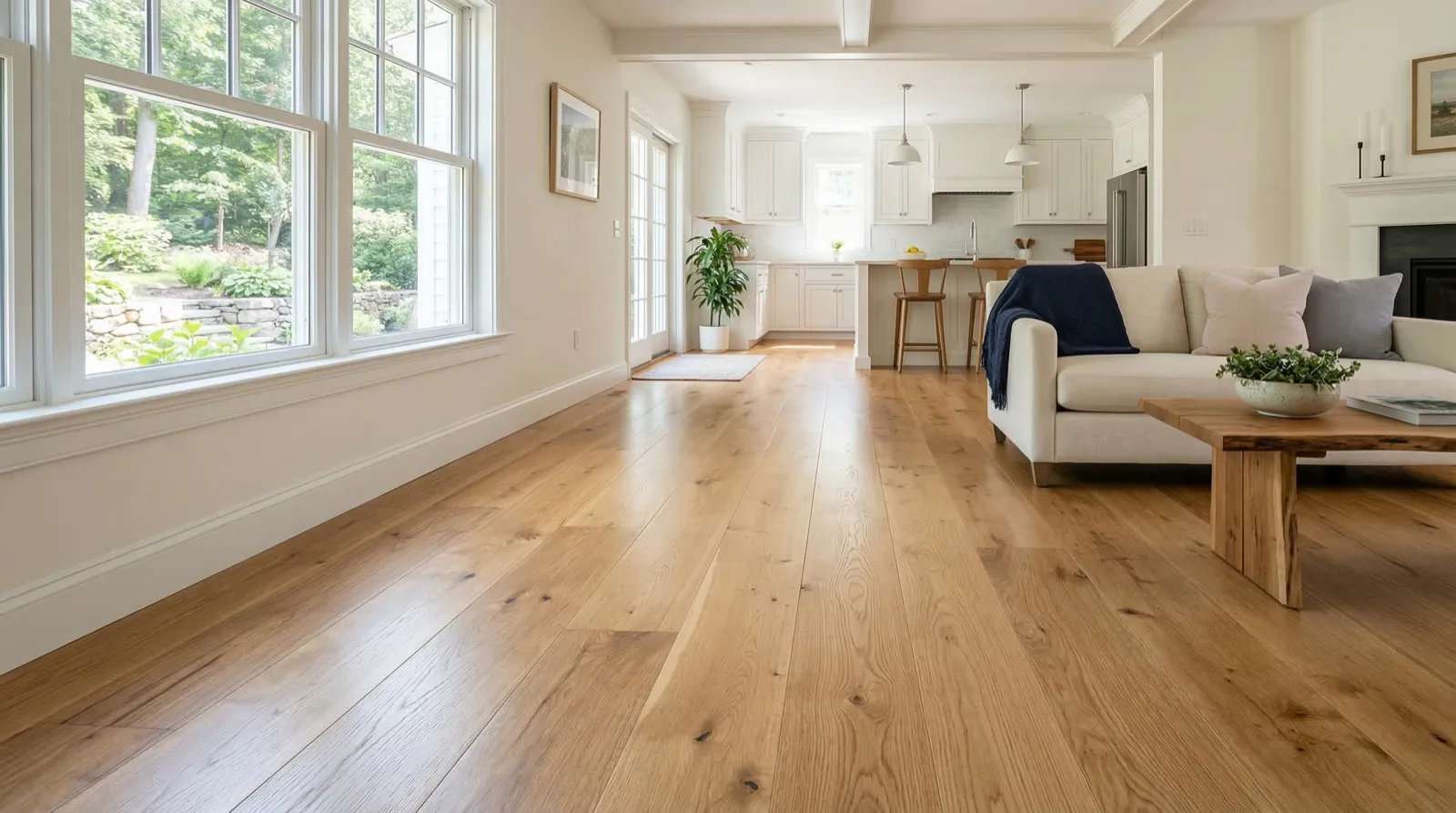
Flooring Costs in New Haven, CT

Many pre-war New Haven homes have original hardwood floors in good condition underneath carpet or vinyl installed in later decades. Where original floors can be refinished, that is almost always the right choice, both for cost and for architectural integrity.

MaterialBest ForInstalled Cost/sq ft
Solid HardwoodLiving rooms, dining rooms, bedrooms$12 - $25
Engineered HardwoodBasements, moisture-prone areas$8 - $18
Luxury Vinyl PlankBasements, kitchens, high-traffic$6 - $14
TileBathrooms, kitchens, entryways$12 - $25

Home Additions Costs in New Haven, CT

Pre-war homes in New Haven may require structural reinforcement and historic district review for additions, adding to project scope.

TypeScopeTypical Range
Bump-OutSingle-room expansion, 100-200 sq ft$150 - $400/sq ft
Single-StoryFamily room, sunroom, or garage conversion$150 - $400/sq ft
Second-StoryFull second floor with structural support$200 - $400/sq ft

Interior Painting Costs in New Haven, CT

ScopeDetailsTypical Range
Per Square FootWalls, ceilings, trim, proper surface prep$3 - $6/sq ft
Single RoomAverage bedroom or living room$800 - $2,500
Whole HomeFull interior, all rooms, trim, doors$8,000 - $25,000+

Interior Carpentry Costs in New Haven, CT

Victorian homes in New Haven often have original trim profiles that require custom matching. Pre-war molding profiles cannot be sourced from standard lumber yards.

ScopeDetailsTypical Range
Hourly RateCustom trim, built-ins, shelving, wainscoting$75 - $150/hour
Crown MoldingPer linear foot, installed$8 - $25/LF
Custom Built-InsBookcases, window seats, mudroom storage$3,000 - $15,000+

Additional Service Costs in New Haven, CT

ServiceDetailsTypical Range
Attic ConversionsFraming, insulation, electrical, flooring, egress$50,000 - $150,000
Decks and PorchesWood, composite, or PVC with railings and permits$15,000 - $75,000
Design and PlanningLayout, material selection, 3D rendering, permit drawings$2,500 - $15,000
Comfort and AccessibilityGrab bars, walk-in showers, widened doorways, ramps$5,000 - $50,000
Insurance ReconstructionFire, water, storm damage rebuilds with carrier coordination$25,000 - $250,000+

What Drives Cost in This Market

New Haven's pre-war housing stock is the primary cost driver. Over 40% of homes predate 1940, which means projects regularly involve balloon framing remediation, knob-and-tube rewiring at $15,000 to $30,000, lead paint abatement, asbestos testing, and steam heat coordination. Historic district requirements in Wooster Square add HDC review timelines and material specifications. The city's online-only permit portal runs up to 30 days for standard review. These are not surprises if you work with a contractor who is honest about what is inside the walls of a 100-year-old New Haven home.

Our Services

Our Remodeling Services in New Haven, CT

BuiltWell CT provides a full range of remodeling services in New Haven including kitchen renovation, bathroom remodeling, basement finishing, flooring, home additions, interior painting, carpentry, attic conversions, decks, design, and accessibility modifications, all permitted and backed by CT HIC License #0668405. New Haven's Victorians, multi-family properties, pre-war housing in East Rock and Westville, and historic district requirements shape how we approach every project.

Ready to Remodel in New Haven?

From our Orange headquarters - 15 minutes from New Haven - we bring local expertise and a straightforward process to every project in the city.

Get Your Free EstimateOn-site or remote via Google Meet. No charge, no obligation.
Working With Us

What to Expect Working With BuiltWell

We handle all New Haven permits, Building Department portal submissions, HDC coordination where applicable, inspection scheduling, and subcontractor management under CT HIC License #0668405, with daily progress updates and a five-step process covering consultation through final walkthrough. We carry full liability insurance and workers' compensation, and we do not start a project until permits are pulled and the scope is in writing with a clear timeline attached.

Our five-step process covers every project regardless of scale: Consultation, Planning, Selections, Build, and Walkthrough. You can read through the full process at /process/. In practice, what this means for a New Haven project is that the planning phase accounts for the online permit portal timeline, HDC review where the property is in a local historic district, and any pre-war remediation items (knob-and-tube rewiring, lead abatement, asbestos testing) that need to be in the scope from the start rather than discovered mid-project.

During active construction, you receive daily updates on progress and a clean job site at the end of every workday. If something unexpected turns up inside a wall, you hear from us that day with an explanation of what we found and your options before we proceed.

New Haven County Project Reference

Our work in New Haven County includes a whole-home restoration in nearby Hamden, where the project involved flooring, interior painting, bathroom remodeling, and drywall throughout a home that had sustained significant damage. "We were devastated when we saw the damage. BuiltWell took everything off our plate," said the Martins, Hamden. You can read the full case study at /case-studies/whole-home-restoration-hamden/.

New Haven projects are served from our Orange, CT office. For county-level context on the full scope of what we do in this market, visit /new-haven-county/.

Common Questions

Frequently Asked Questions: New Haven Remodeling

New Haven homeowners most commonly ask about permit requirements, remodeling costs, project timelines, and what makes renovation more complex in the city's pre-war Victorian, Craftsman, and Colonial housing stock.

Do I need a permit for a kitchen remodel in New Haven, CT?

Yes. Any kitchen remodel that involves structural work, electrical changes, or plumbing modifications requires permits through New Haven's online-only Building Department portal at 165 Church Street. Paper applications are not accepted. The standard approval timeline is 30 days by law. Express permits for simpler scope work are issued instantly unless the property is in a local historic district, which triggers HDC Certificate of Appropriateness review first. Structural work requires plans stamped by a Connecticut-licensed architect or engineer. We handle all permit applications and inspection coordination as part of every project. You do not need to navigate the portal yourself.

What makes remodeling a Victorian or pre-war home in New Haven different from newer construction?

Pre-war homes in New Haven regularly involve six conditions that newer construction does not: balloon framing (studs running continuously from foundation to roof without fire blocking at floor lines, requiring fire blocking installation when walls are opened under current code); three-coat plaster on wood lath rather than drywall (different demo volume, different repair approach); knob-and-tube wiring (no ground, cannot be covered with insulation, CT code requires replacement during significant renovation at $15,000 to $30,000 for a full rewire); lead paint in multiple layers (EPA RRP certification required for any work disturbing more than six square feet per room); asbestos-containing materials in pipe insulation, floor tiles, and ceiling materials (licensed abatement required above threshold quantities under CT DPH rules); and steam heat systems requiring specialty trade knowledge for boiler replacement or conversion. A contractor who knows these conditions flags them at the consultation. One who does not learns them as change orders after demolition starts.

How much does a kitchen remodel cost in New Haven, CT?

Kitchen remodeling in New Haven costs $25,000 to $50,000 for a basic refresh, $50,000 to $90,000 for a mid-range project with new cabinets and updated layout, and $90,000 to $150,000 or more for a high-end renovation with custom cabinetry and structural modifications. In East Rock, Prospect Hill, Wooster Square, and Beaver Hills, projects in pre-war homes typically carry an additional $15,000 to $40,000 in remediation costs for items that arise from the housing stock's age: lead abatement, knob-and-tube rewiring, asbestos testing and licensed abatement where required, and steam system coordination. These are not unexpected surprises if you work with a contractor who is honest about what is likely inside the walls of a 100-year-old New Haven home.

Does my Wooster Square or East Rock home need Historic District approval for renovation?

It depends on which neighborhood and which type of district. Wooster Square is covered by New Haven's first local historic district (established 1970), which requires a Certificate of Appropriateness from the Historic District Commission before any exterior architectural change can proceed. This applies to windows, doors, siding, exterior trim, and other exterior features. Contact the HDC at hdc@newhavenct.gov before planning any exterior work. East Rock is covered by the Whitney Avenue Historic District, which is a National Register listing only, not a local historic district. National Register status does not impose mandatory review on exterior changes for privately owned residential properties. You do not need HDC approval to change your windows or siding in East Rock. You are, however, eligible for Connecticut state historic tax credits on qualified rehabilitation work, which is worth discussing with your tax advisor.

How long does a bathroom remodel take in New Haven?

A typical bathroom remodel in New Haven takes three to six weeks for active construction. Add one to two weeks if the project involves steam system work. Replacing a steam supply line or coordinating with the steam heat system requires scheduling a specialty trade that adds time to the sequence. Permit approval through New Haven's Building Department runs up to 30 days, though express permits for simpler scope work are issued instantly. We build the permit timeline into the project schedule during planning so your start date reflects what is actually achievable.

What happens if my New Haven, CT home needs reconstruction after a fire?

If your New Haven home needs reconstruction after a fire, the process starts with your insurance claim and an adjuster's damage assessment, followed by professional mitigation and then full rebuild. We handle fire reconstruction projects in New Haven from initial board-up and debris removal through complete restoration. We work directly with insurance carriers including State Farm, Liberty Mutual, Travelers, and The Hartford to document the full scope of damage, negotiate fair pricing on supplementals, and manage the rebuild. In New Haven's older housing stock, fire damage often reveals pre-existing conditions like knob-and-tube wiring or asbestos that must be addressed during reconstruction under current code, which we document for supplemental coverage. We bill your insurance carrier directly so you are not managing contractor payments out of pocket. Fire reconstruction in New Haven typically takes 3 to 6 months depending on the extent of structural damage. We hold CT HIC License #0668405 and carry the liability and workers' compensation coverage that carriers require.

How do you handle lead paint during renovations in New Haven, CT?

Lead paint in New Haven renovations is handled through EPA-certified Renovation, Repair, and Painting (RRP) procedures, which are legally required for any work disturbing more than six square feet of painted surface in homes built before 1978. The majority of New Haven's housing stock predates 1978, so lead paint is a factor on most renovation projects in neighborhoods like East Rock, Wooster Square, Westville, and Beaver Hills. Our crews are EPA RRP-certified and follow containment, dust control, and cleanup protocols on every project where lead paint is present. We test painted surfaces before demolition begins. If lead is found, we install plastic containment barriers, use HEPA-filtered equipment, and perform clearance testing after the work is complete. Lead abatement adds $2,000 to $8,000 to a typical renovation depending on the number of rooms and layers involved. This is not optional work. It is a federal requirement, and any contractor who skips it is putting your family at risk and exposing you to liability.

Nearby Towns

New Haven County Towns We Also Serve

We serve all of New Haven County from our Orange, CT office. Orange is our home base and the town where we know the roads, the housing stock, and the Building Department best.

New Haven County Connecticut towns served by BuiltWell CT

New Haven County

Call New Haven: (203) 466-9148

Served from our Orange, CT office. We cover every town in the county with dedicated local crews who know the housing stock and building departments.

OrangeNew HavenHamdenBranfordGuilfordMadisonWoodbridgeMilfordCheshire
AnsoniaBeacon FallsBethanyDerbyEast HavenMeridenMiddleburyNaugatuckNorth BranfordNorth HavenOxfordProspectSeymourSouthburyWallingfordWaterburyWest HavenWolcott

Learn more about New Haven County
Get Started

Schedule Your Free Consultation

On-site or remote (Google Meet or Zoom). Call (203) 466-9148 or fill out the form below.

We're based in Orange, CT and serve all of New Haven County. We'll confirm your appointment within one business day.

BuiltWell CT meeting with a New Haven homeowner for a remodeling consultation
BuiltWell CT owner meeting homeowner for a free consultation
Preferred Contact Method *

We respond within 24 hours. No spam, no obligation.

Flexible Financing Available. Get approved in about 60 seconds and start your project today.

Check Financing Options